


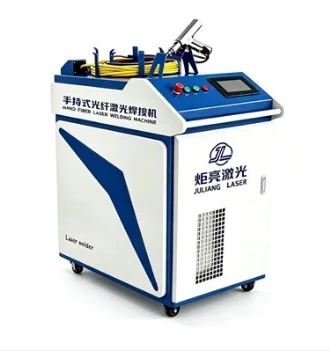
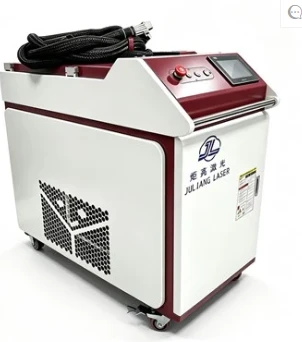
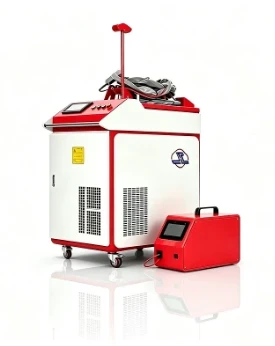
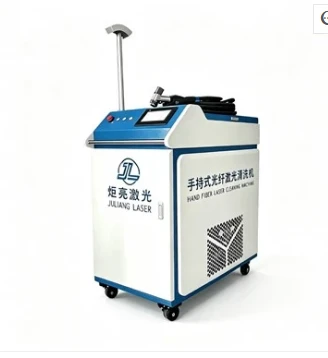
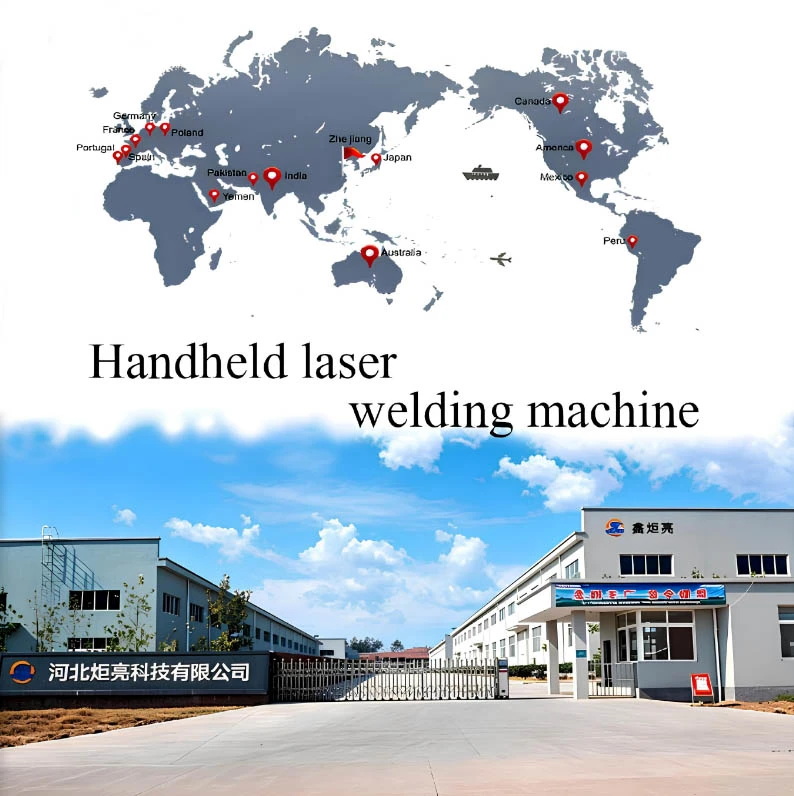
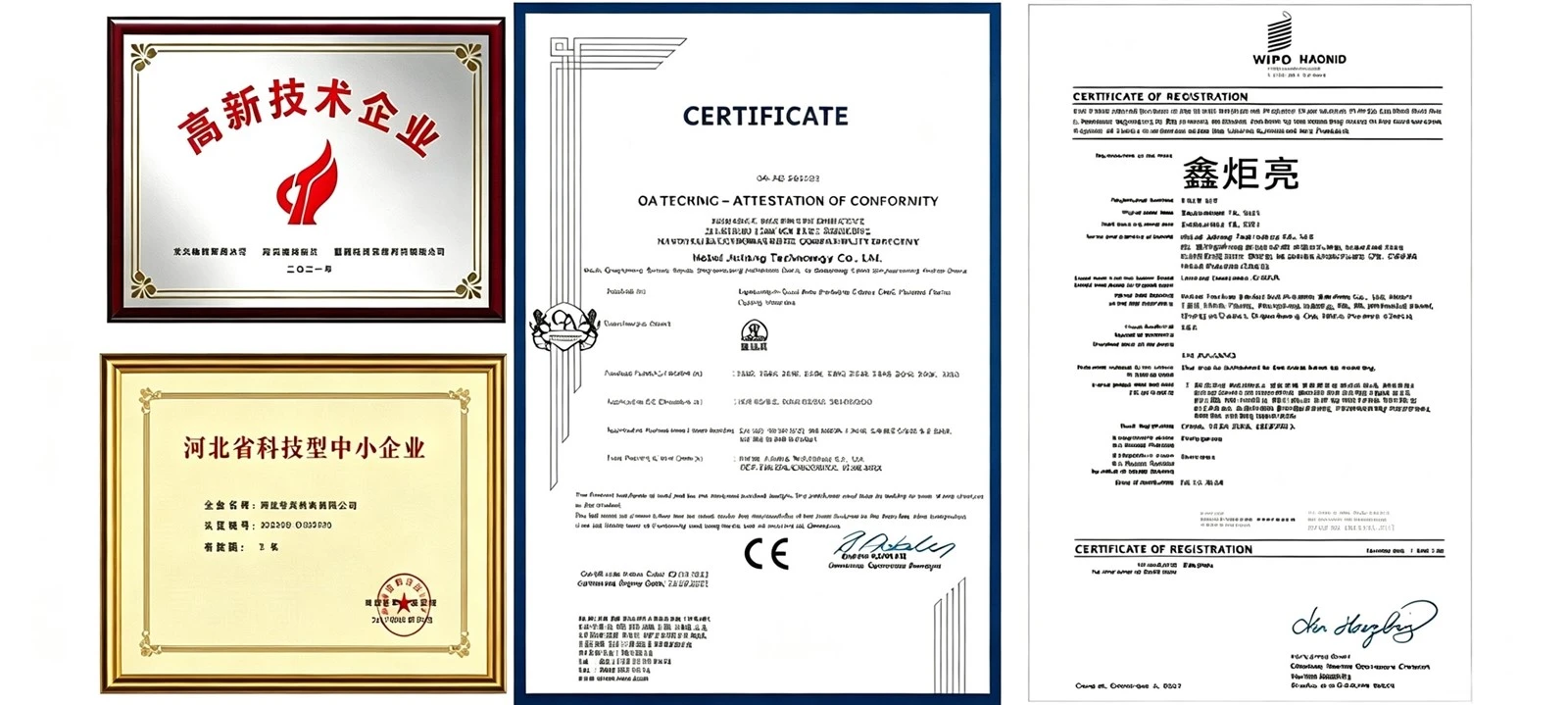
Hebei Juliang Technology Co., Ltd. is one of the leading manufacturers and suppliers of handheld laser cleaner for surface rust removal in China. Please feel free to buy CE approved machinery made in China here from our factory. All customized machines are with high quality and competitive price.
What This Tool Actually Does
A handheld laser cleaner for surface rust removal is basically a portable fiber laser system that uses pulsed energy to vaporize rust, paint, and oxides off metal surfaces-no grinding, no chemicals, no abrasive media. The beam targets the contamination layer, breaks it down into fine dust, and leaves the base metal untouched. What makes this useful isn't just the cleaning itself-it's the speed, the control, and the fact that you're not removing material from the substrate every time you prep a surface. Whether you're in a fabrication shop, a shipyard, or a heavy equipment maintenance yard, this tool changes how you approach surface prep.

We've been making industrial laser equipment since 2014, and we've learned the hard way that material choices determine whether a machine lasts or becomes a problem. Here's what we do differently.
The chassis is fabricated from welded steel plate, and every frame goes through stress-relief heat treatment after welding. Skip this step-and plenty of manufacturers do-and the frame gradually distorts over months of use. The internal stresses from welding slowly pull the structure out of alignment, and cleaning performance degrades. Operators notice it as "it's not cleaning like it used to," but they can't pinpoint why. We do the stress relief because we've seen machines that had it hold alignment for years, and machines that didn't start drifting within the first year.
The cleaning head housing uses a glass-fiber reinforced polymer composite, not standard ABS plastic. The composite absorbs impacts better when the head gets bumped against steel structures, and it doesn't soften or deform under heat. Internal optics are mounted in an aluminum cradle machined specifically to match the thermal expansion coefficient of the laser source. When the system heats up during operation, the cradle and source expand at similar rates, so the optical path stays aligned. It's a detail that costs more to produce but makes a measurable difference in long-term stability.
The fiber delivery cable has an armored jacket with a steel spiral and crush-resistant overmolding. We've seen these cables survive being dragged across grating, stepped on, and occasionally run over by equipment. The fiber inside is still sensitive to tight bends, but the armor protects against abrasion and impact. The strain relief at both ends is designed to handle the bending cycles that normally cause fiber failure. Replace the cable if it gets damaged-it's the most expensive single component, so treat it with respect.
Air cooling means no water chiller, no coolant, no winter freeze risk. The heat sink uses a copper base plate for efficient heat transfer from the laser diodes, with an aluminum fin stack to keep weight down. The cooling fan is rated for 50,000 hours continuous operation-about six years of daily 8-hour shifts. When it eventually wears out, it's a standard off-the-shelf replacement, not a proprietary part.
Adjustable parameters for different contamination types. Power output, pulse frequency, and scan speed are all adjustable through the control interface. Store up to 50 presets for different jobs-one for light rust on steel, another for heavy paint removal, another for mold cleaning. Switch between jobs without retuning from scratch.
Structural steel fabrication: Removing mill scale and surface rust before welding. Clean oxide layers reduce weld porosity and defects. This is the most common application and where we see the fastest payback.
Shipbuilding and marine repair: Corrosion removal on hull sections and interior structures without reducing plate thickness. The non-contact process is valuable when class societies require minimum material gauges.
Heavy equipment overhaul: Cleaning components during rebuild cycles-frames, buckets, boom sections. Removing built-up rust and paint allows proper inspection and reassembly.
Mold and die cleaning: Plastic injection molds accumulate residue that affects part quality. Laser cleaning removes it without wearing down the tool surface, extending tool life between refurbishments.
Infrastructure maintenance: Steel bridges, towers, pipelines-anywhere corrosion needs removal without damaging the underlying structure.
Where it doesn't work well: Thick epoxy coatings over about 300 microns are still faster to remove mechanically. Pitted rust on heavily corroded castings leaves a textured surface after laser cleaning-the rust is gone but the pits remain, and you'll still need mechanical cleanup for a smooth finish. Very large flat areas with light coating-the laser works, but at some point abrasive blasting becomes more economical despite media disposal cost.
Q: How does handheld laser cleaning compare to needle scaling on labor hours?
A: Needle scaling takes roughly 3-4 times longer for the same area on structural steel, and it requires more physical effort from the operator. Laser cleaning covers more area per pass and doesn't fatigue the operator as quickly. Your actual savings depend on part geometry and rust severity.
Q: Can this remove rust from inside pipe or tube surfaces?
A: The cleaning head requires line-of-sight to the surface. For pipe interiors, you'd need a different delivery configuration-straight-line access only. We don't offer a right-angle head, so external surfaces or open-access internal surfaces only.
Q: What's the expected service life of the laser source?
A: Rated for approximately 100,000 hours of operation under normal conditions, based on manufacturer specifications and our field experience. That's roughly 12 years at a 40-hour work week. The source is sealed and not user-serviceable-if it fails within the 2-year warranty period, we replace it.
Q: Do you offer training videos or documentation for new operators?
A: Yes, we provide a comprehensive operator manual with recommended parameters and troubleshooting guides. We also offer remote video training-our engineers walk your operators through the first few jobs on a video call. No charge for this service.
Q: What's the lead time for replacement parts like protective windows?
A: Protective windows and other consumables are stocked for immediate shipment. Most orders ship within 1-2 business days. For major components like the delivery cable or cleaning head assembly, lead time is typically 5-7 business days depending on stock status.
A steel structure manufacturing company in Hebei Province has a long history of processing steel structures and hardware components for clients both at home and abroad. For a considerable time, removing rust and old paint from their workpieces has been the most difficult part of their workshop operations. Historically, the factory primarily used sandblasting and manual grinding with angle grinders. This method generated pervasive dust and extreme noise, creating an unpleasant and unhealthy environment for the workers. Manual grinding was not only slow and labor-intensive but also heavily dependent on worker skill. Insufficient force meant incomplete rust removal, while excessive force could damage the base material, compromising the quality of subsequent welding and painting. The sandblasting process was a drain on resources due to the high consumption of materials like sand and abrasives, amounting to a substantial monthly expense. Furthermore, managing dust emissions to meet environmental standards was a constant struggle, adding to regulatory pressure. When faced with urgent export orders, the rust removal stage frequently caused delays, necessitating overtime, yet often failing to meet deadlines. On several occasions, this even led to postponed shipments.
Seeking a more effective solution, the factory manager began an extensive search for better rust removal methods. He investigated various industrial equipment online and consulted with numerous manufacturers, evaluating several laser cleaning systems. Many of these options were complicated to use, had frequent malfunctions, and offered sluggish after-sales support, deterring him from an easy decision. Through careful comparison of technical specifications and examination of real-world customer applications, his attention eventually focused on the Jieliang handheld laser rust removal machine.
Once the equipment was delivered, Jieliang's technicians efficiently managed the on-site installation and calibration, followed by comprehensive, practical training for the workshop employees. The machine was remarkably easy to operate, requiring no specialized professional knowledge, and workers were able to become proficient in a short period. With a gentle sweep of the handheld gunhead across the workpiece's surface, rust, oxide layers, and old paint were removed instantly. It achieved thorough cleaning on flat areas, weld seams, and intricate edges and corners without causing any harm to the base material.
This new process generated no significant dust and eliminated the need for consumable discs or abrasive materials. A single operator could now manage the task. A rust removal job that previously took three to four workers two full days could now be completed by one person with the machine in just half a day. The workshop's working conditions saw a significant improvement, and the threat of environmental compliance issues disappeared. The consistency and uniformity of the rust removal quality drastically reduced the rate of products needing rework.
The combination of reduced consumable costs and enhanced processing efficiency enabled the factory to confidently accept and fulfill export orders. The manager confirmed that acquiring the Jieliang laser rust removal machine not only lowered expenses related to labor and consumables but also provided greater assurance of product quality, thereby strengthening the factory's competitive position in the demanding processing market.


Hot Tags: handheld laser cleaner for surface rust removal, China handheld laser cleaner for surface rust removal manufacturers, factory


