


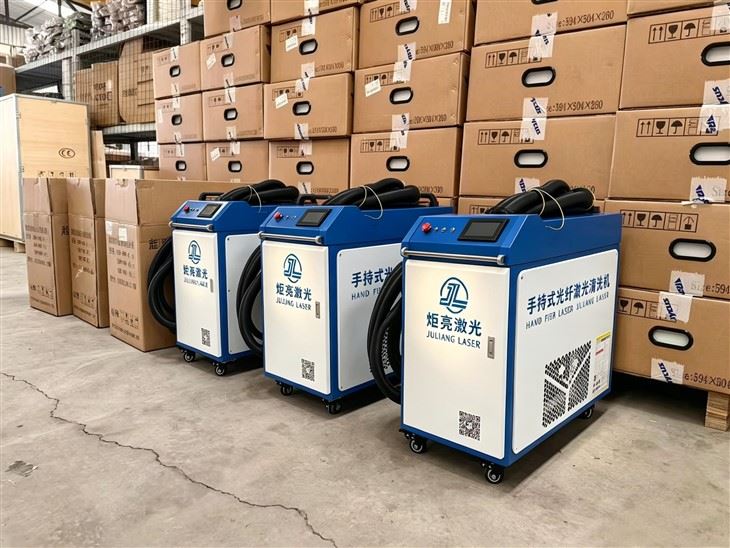
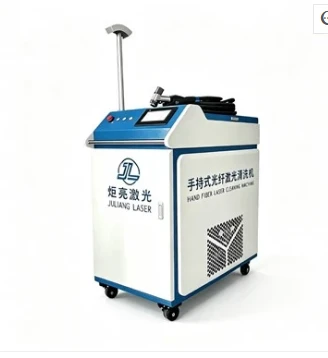
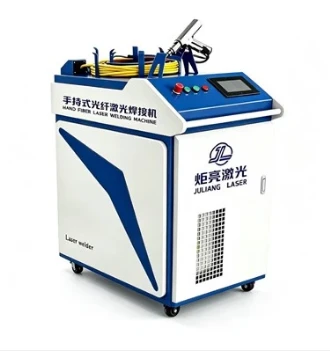
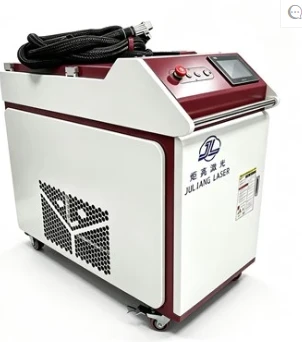
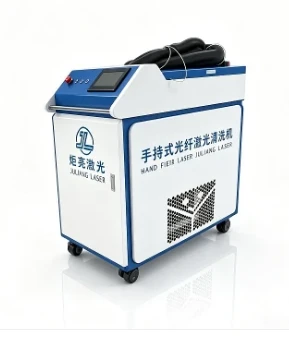
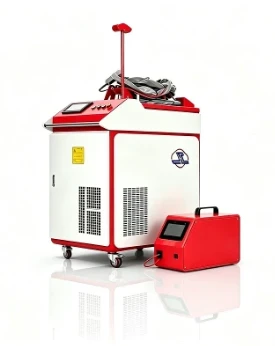
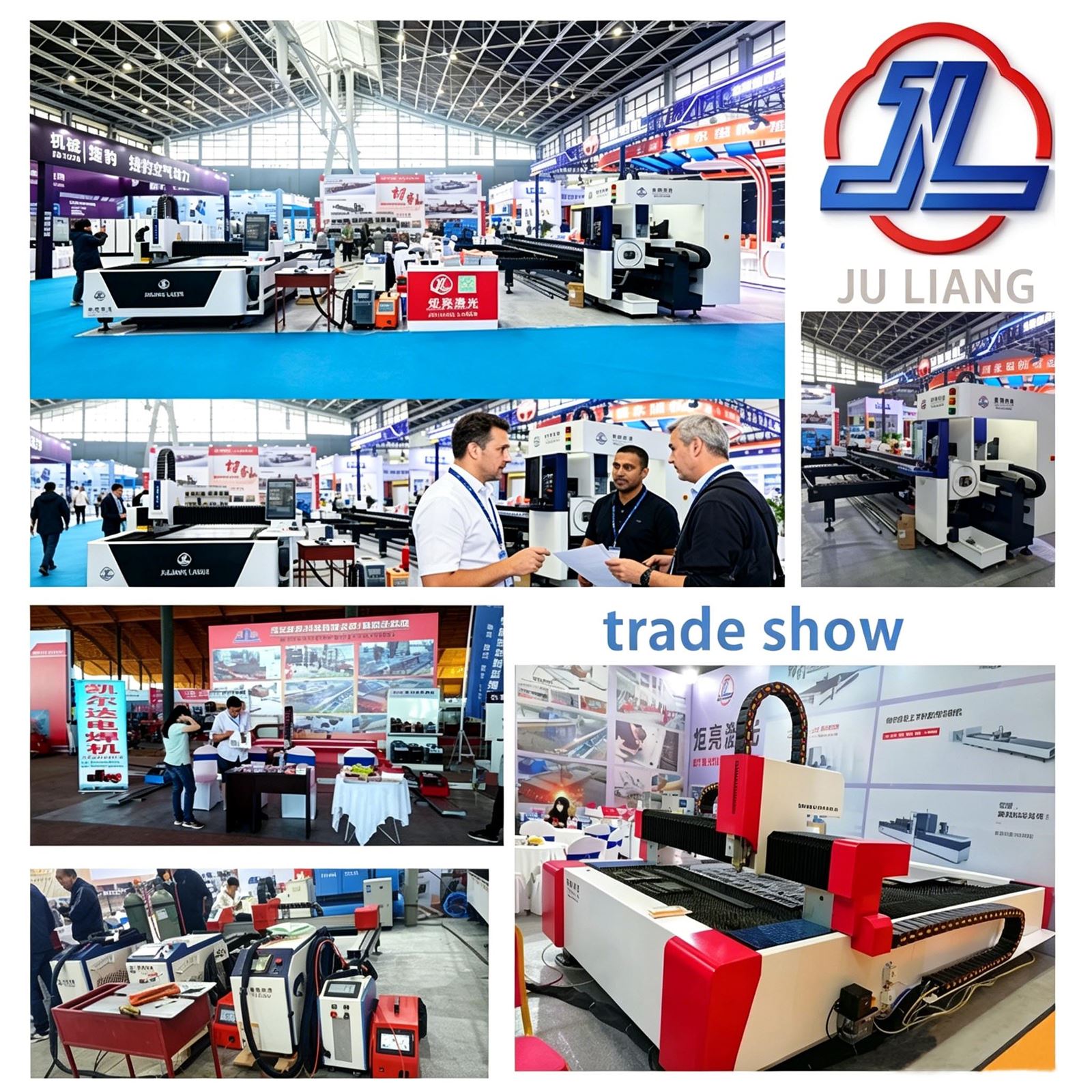
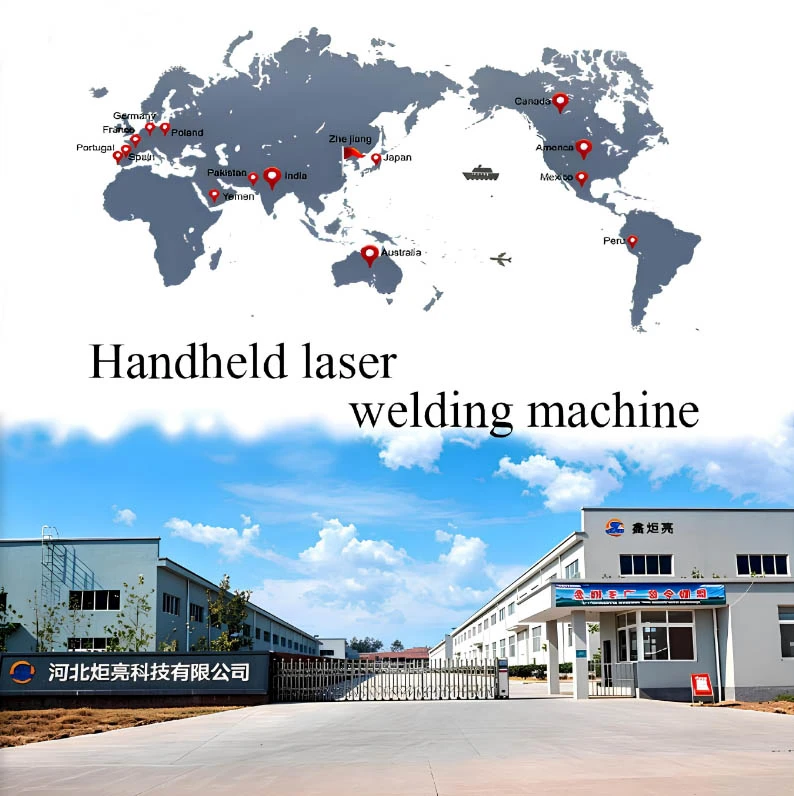
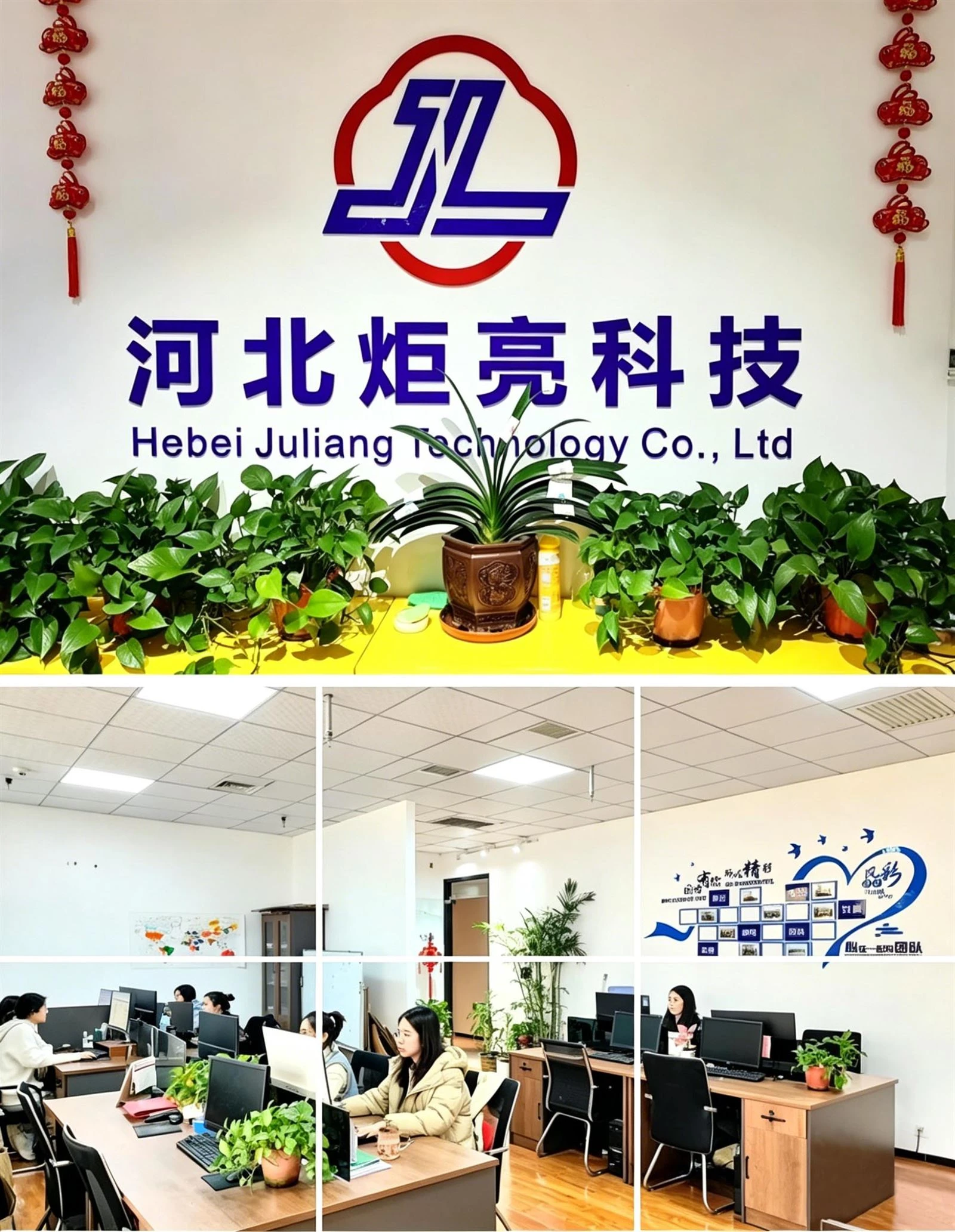
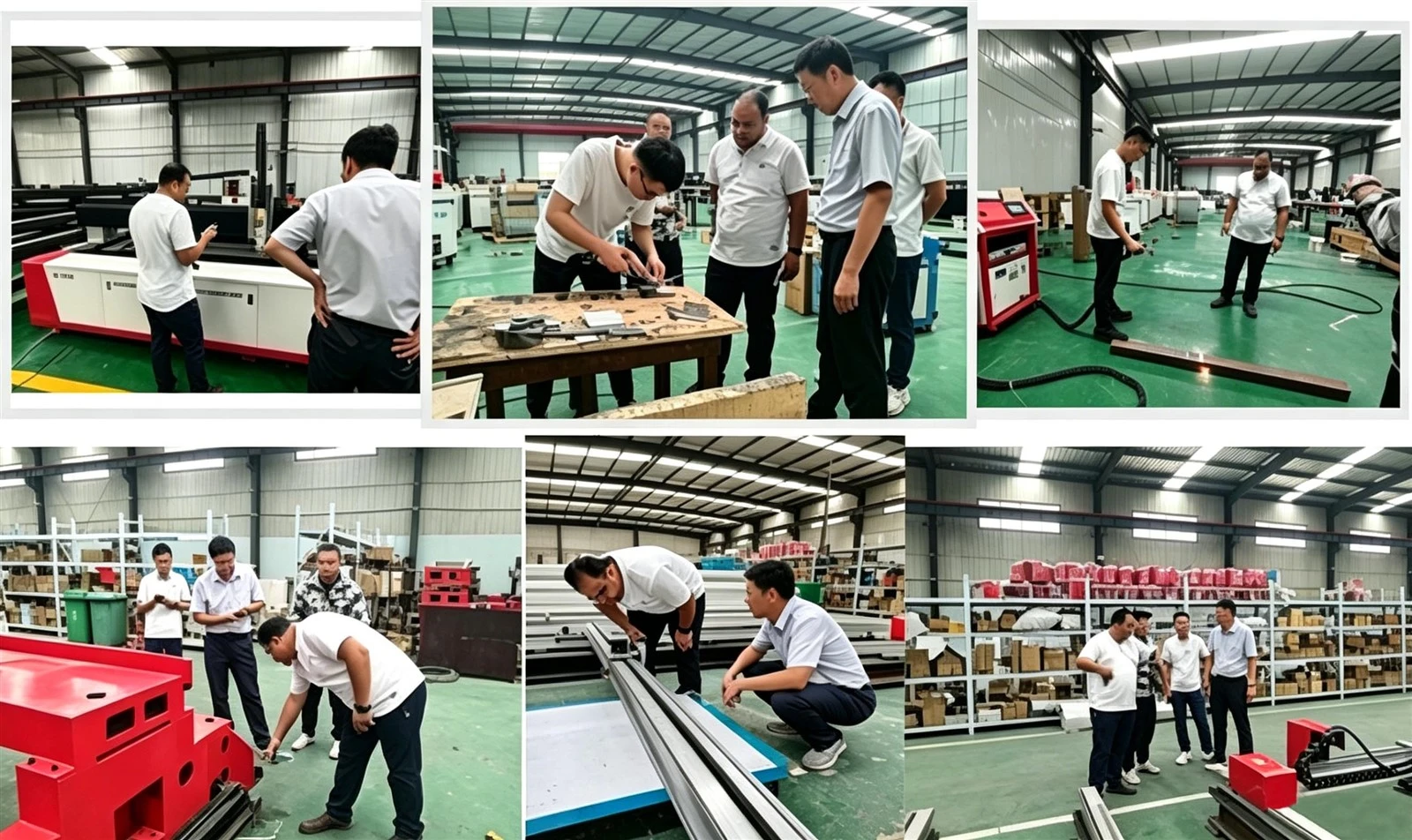
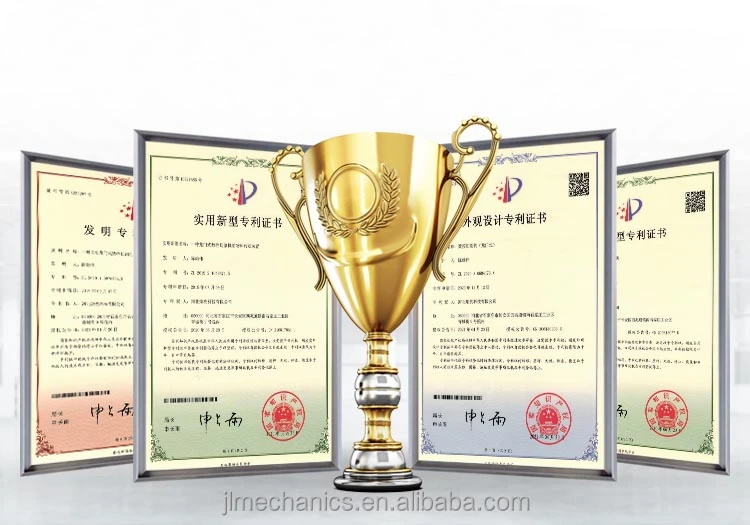
Hebei Juliang Technology Co., Ltd. is one of the leading manufacturers and suppliers of metal surface handheld laser cleaning machine in China. Please feel free to buy CE approved machinery made in China here from our factory. All customized machines are with high quality and competitive price.
A metal surface handheld laser cleaning machine is essentially a portable fiber laser system that vaporizes rust, paint, oil, and oxide layers off metal surfaces without mechanically abrading the base material. No chemicals, no sand, no media disposal headaches. You point the cleaning head at the contaminated area, activate the beam, and watch the surface contamination turn into fine dust that gets extracted through the integrated vacuum port. That's the core function. What makes it useful is the combination of portability, air-cooled simplicity, and the ability to clean selectively-removing only what you don't want while leaving the substrate untouched.

We've been manufacturing industrial laser equipment since 2014, and we've seen what happens when machines are built with the wrong materials. Here's the logic behind our choices.
The frame is fabricated from welded steel plate that goes through a stress-relief heat treatment after welding. Most manufacturers skip the stress relief step-it adds cost and time to production. But without it, the internal stresses from welding gradually distort the frame over months of use. That distortion shifts the optical alignment, and cleaning performance degrades slowly enough that operators don't notice until productivity has dropped significantly. We do the stress relief because we've seen the difference it makes on machines that come back for service after two years.
01
The cleaning head housing uses a glass-fiber reinforced composite rather than standard ABS. The composite handles impact better when the head gets bumped against steel structures, and it resists the chemical exposure that happens in shops where solvents and oils are everywhere. Internal optics are mounted in an aluminum cradle machined to match the thermal expansion characteristics of the laser source. When the system heats up during operation, the cradle and the source expand at similar rates, maintaining alignment. It's a detail that doesn't show up in marketing photos but matters when you're running the machine for hours at a time.
02
The delivery cable is armored with a steel spiral jacket and crush-resistant overmolding. We've seen these cables survive being dragged across grating, stepped on by operators, and occasionally run over by equipment. The fiber inside is still the sensitive part-you can't bend it beyond its minimum radius-but the armor protects against the abrasion and impact that kill cables in shop environments. The strain relief at both ends is designed to handle the bending cycles that normally cause fiber failure.
03
Air cooling means no water chiller, no coolant, no freeze risk. The heat sink uses a copper base plate for heat transfer from the laser diodes, with an aluminum fin stack for weight reduction. The cooling fan is rated for 50,000 hours of continuous operation-about six years of daily use. When it eventually wears out, it's a standard off-the-shelf replacement, not a proprietary part that requires a markup.
04
Customer Case: Real Problem, Real Fix
A structural steel fabricator in Southeast Asia had a recurring problem with weld quality on heavy beams. They were grinding off mill scale and surface rust before welding, then grinding weld seams clean after welding. The grinding process was inconsistent-operators would sometimes miss spots, or over-grind in others. The result was variable weld quality and a rework rate that management couldn't ignore.
They purchased a 300W handheld laser cleaning machine from us and integrated it into their beam line.
The results after four months:
Prep time per beam dropped from about 45 minutes (two operators with grinders) to 12-15 minutes (one operator with the laser).
Weld defects dropped by roughly 60%-cleaner surfaces meant fewer inclusions and less porosity.
Grinding disc consumption dropped by over 70%, which alone paid for a significant portion of the machine cost within the first quarter.
The rework rate on welded assemblies dropped from about 8% to under 3%.
The unexpected benefit: they now clean parts immediately before welding, rather than days in advance. Previously, pre-ground material would sit in the humid shop and re-rust before welding, requiring another clean. Now they clean in-line with the welding schedule, and the re-rust problem disappeared.

Configuration Options
| Model | Power | Best For |
|---|---|---|
| 200W | Light to medium rust, paint stripping | General fabrication and maintenance. Mill scale, light paint, moderate rust. |
| 300W | Heavy rust, thick paint | Structural steel, shipyard work, equipment overhaul. |
| 500W | Extreme coatings, maximum throughput | Dedicated cleaning operations, high-volume production. |
We can run sample tests on your material at our facility. Send a sample with your typical contamination, we'll test it, and recommend the power level. Free service-best way to avoid under- or over-specifying.
Frequently Asked Questions
Q: How does handheld laser cleaning compare to abrasive blasting on labor hours?
A: Laser cleaning typically uses one operator versus two for blasting, with no media setup or cleanup time. For a typical structural beam, laser cleaning takes about one-third the labor hours of grinding and about half of blasting (excluding media handling). Your actual savings depend on part size and coating thickness.
Q: Can this remove rust from irregular shapes and curved surfaces?
A: Yes, within the working distance range of the cleaning head-about 150-200mm from the surface. The operator moves the head along the surface, and the beam stays in focus across minor contours. For deep concave shapes or tight internal corners, accessibility is the limiting factor.
Q: What's the typical learning curve for an operator?
A: Most operators become comfortable with basic cleaning in about 2 hours of guided practice. Parameter adjustment takes longer-maybe a week of regular use to understand how different settings affect different coatings. We provide a reference chart with starting points for common materials.
Q: Do you offer custom cable lengths for the cleaning head?
A: Yes, we offer 5m, 10m, and 15m options. Longer cables have slightly higher signal loss, so we adjust calibration at the factory. Specify your typical reach requirement when ordering.
Q: What's included in the 1-year warranty-and what's excluded?
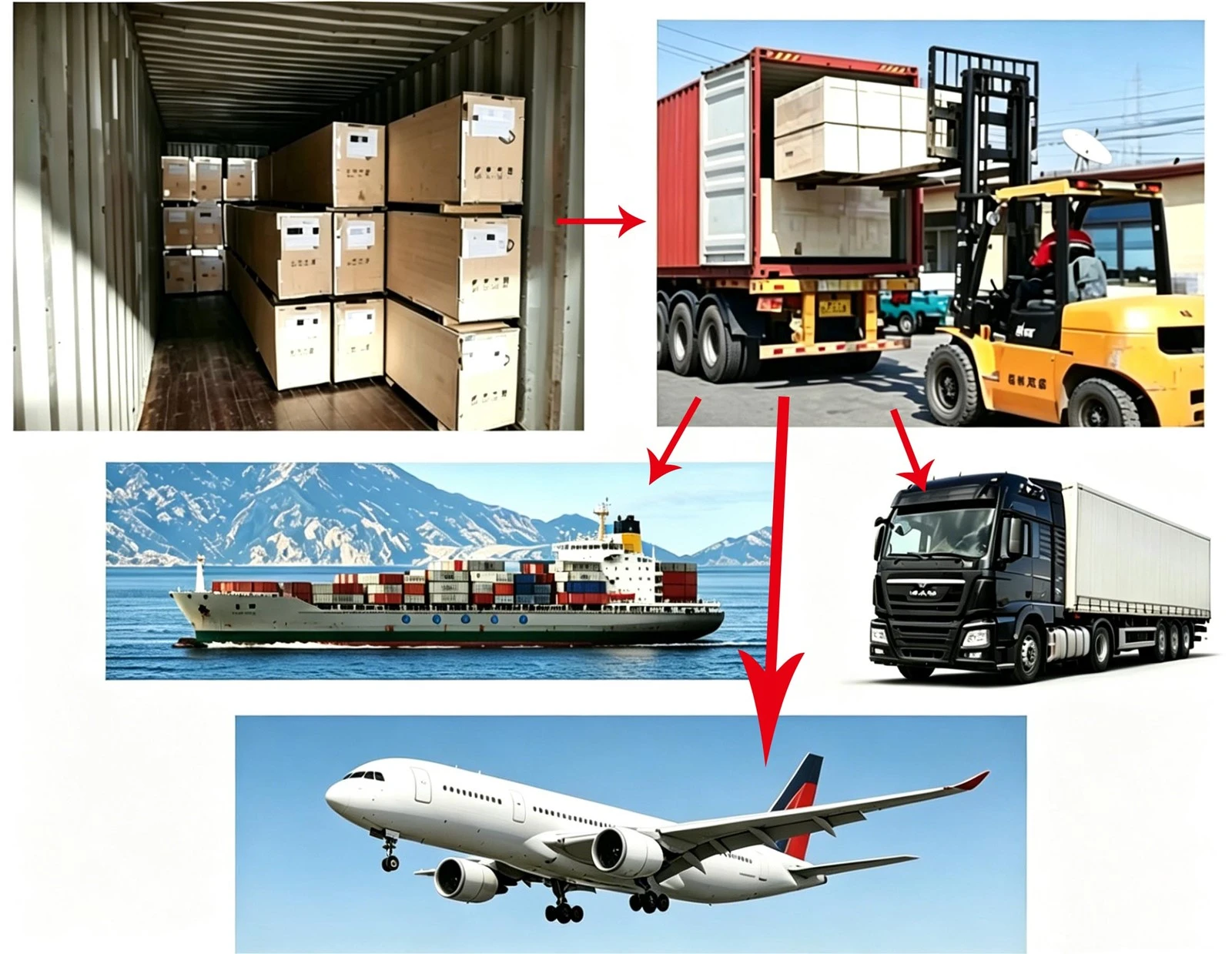
A: The warranty covers defects in materials and workmanship. It does not cover consumables (protective windows), damage from misuse, or damage from dropping the cleaning head. The laser source has a separate 2-year warranty. Labor for warranty repairs is covered, but shipping costs are the customer's responsibility.
Hot Tags: metal surface handheld laser cleaning machine, China metal surface handheld laser cleaning machine manufacturers, factory


