


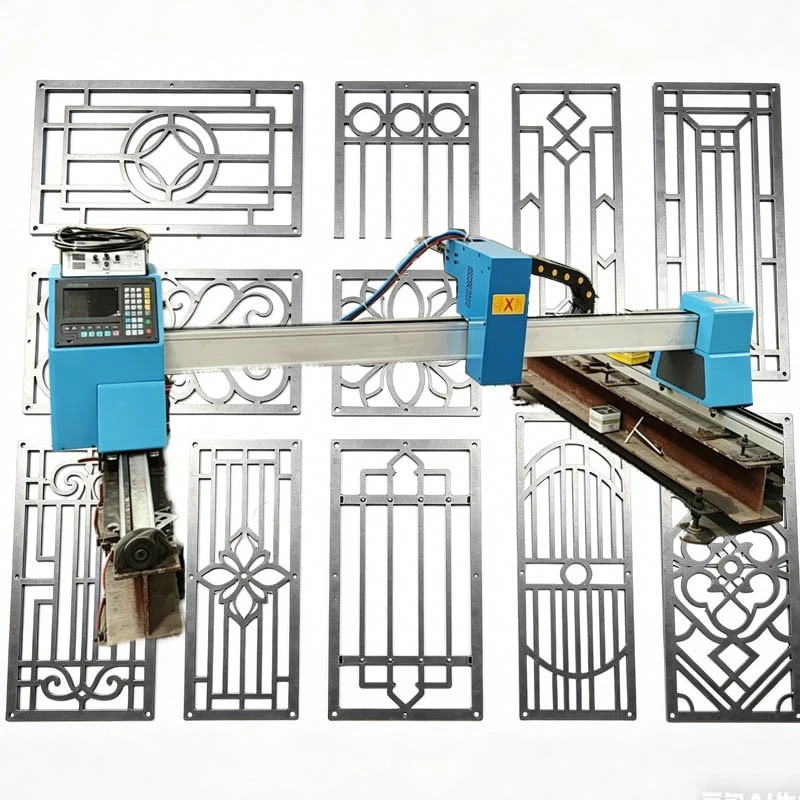
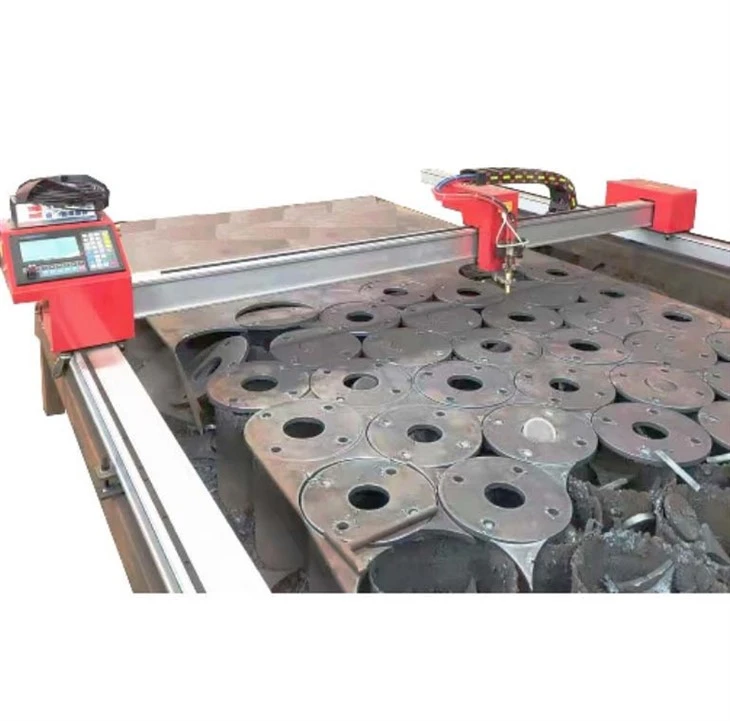
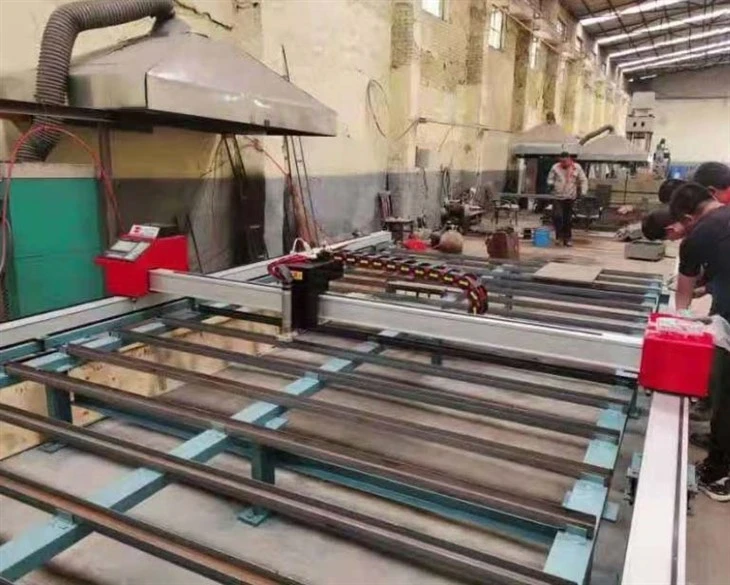
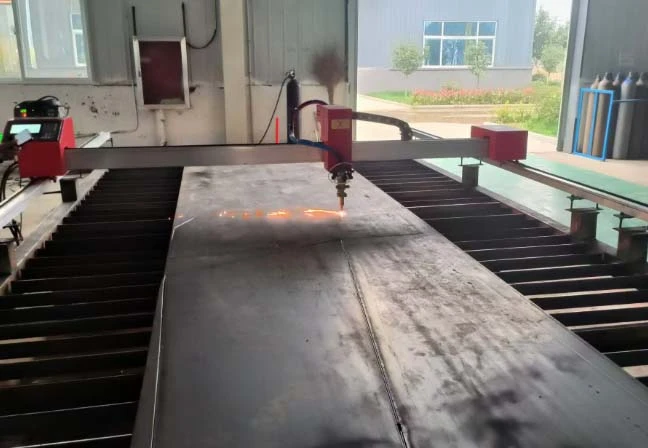
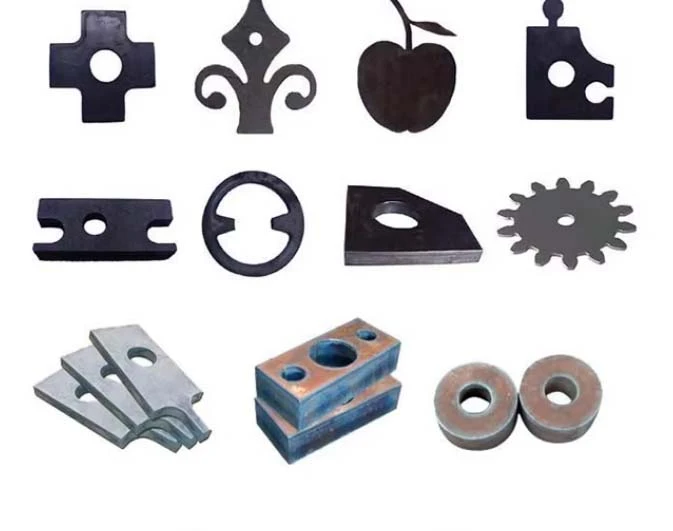
Hebei Juliang Technology Co., Ltd. is one of the leading manufacturers and suppliers of light duty gantry cutter in China. Please feel free to buy CE approved machinery made in China here from our factory. All customized machines are with high quality and competitive price.

Product presentation
This is a fiber laser cutting machine, a computer-controlled metal processing system. It uses a powerful fiber laser beam to precisely cut materials like steel, stainless steel, aluminum, and copper. Unlike CO₂ lasers, which need mirrors and gases, fiber lasers create their beam inside a special optical fiber and send it through a flexible cable. This beam has a shorter wavelength (around 1.06 microns) that metals absorb much better, so less energy is wasted and more is used for cutting.
These machines are now standard in metal fabrication because they're so efficient. They can cut thin to medium steel plates up to three times faster than plasma, use much less energy, and leave edges so clean they're ready for welding without extra work. A good system can maintain accuracy within ±0.03mm per meter, ensuring parts fit together perfectly the first time.
How the Machine Is Built
The construction of a fiber laser cutting machine fundamentally determines its lasting accuracy and how reliably it can produce parts over time.
It all begins with the machine's base, known as the bed frame. These frames are typically constructed from welded steel and strengthened with internal ribs. A critical step that must not be skipped is stress-relief heat treatment after welding. Without this, residual stresses from the welding process can cause the bed to warp over the first year of operation. By the time accuracy problems become apparent, it's usually too late to correct them. After heat treatment, the bed is precisely machined on a gantry mill. This ensures that all surfaces where components will be mounted are perfectly aligned in a single operation, guaranteeing that the rails will be parallel and on the same plane.
The gantry, which carries the cutting head and moves across the machine, is the next key component. It needs to be both robust and lightweight. Most machines use an extruded aluminum beam reinforced with internal ribs, which offers great stiffness without being overly heavy. A lighter gantry means smaller servo motors are needed, less stress is placed on the drive system, and the machine performs better dynamically.
For the drive system, both axes use precision-ground rack and pinion gears. The gantry is equipped with motors on both sides – a dual-drive system that ensures the beam stays perfectly square to the rails. If this isn't present, a single drive motor could cause the gantry to twist during fast movements, especially when cutting near the table's edges. Standard positioning accuracy is within ±0.03mm per meter, with a repeatability of about ±0.02mm.
The cutting head contains the focusing lens and a protective window at the bottom. This window is a replaceable part designed to catch most of the spatter, thereby protecting the expensive optics behind it. It can be swapped out in seconds when it gets dirty.
Typically, the control system is an industrial computer featuring a touchscreen. This controller stores settings for different materials and thicknesses, enabling automatic adjustments. For instance, selecting 'stainless, 2mm' will automatically configure the power, speed, and gas pressure.

What Goes Wrong and How to Fix It
Problems with Cut Edges
The most common issue is rough edges, often stemming from incorrect focus, a worn nozzle, or a dirty lens. Start by checking the protective lens. If it's smudged, clean it with lens wipes and isopropyl alcohol. If it's damaged, replace it. Then, examine the nozzle for wear and ensure the focus is set properly.
Inconsistent Cuts
Different batches of material can have slight variations in their composition, affecting how the laser cuts. The machine isn't designed to automatically compensate for these subtle differences. If cut quality changes abruptly when you get new material, it's a sign your supplier has altered something. Try adjusting the feed rate by 5-10% instead of tweaking the power or gas settings.
Thermal Expansion Effects
Over long periods of operation, the machine's frame can heat up. Steel expands about 0.012mm for every meter of length and every 10°C temperature increase. This can lead to a deviation of 0.036mm on a 3-meter bed if the temperature rises by 10°C. Since the CNC doesn't automatically adjust for this, allow the machine about 30 minutes to reach a stable temperature before cutting thick materials that need precise dimensions.
Lens Fouling
Metal vapor and dust can build up on the protective window, causing the laser beam to scatter and reducing cut quality. If this problem is ignored, the beam might even damage the more delicate focusing lens behind it, leading to expensive repairs. A quick check of the lens every morning is recommended.
Applications Across Industries
Automotive manufacturing
Cutting body panels, chassis components, and structural parts from steel and aluminum-. The precision and speed are essential for high-volume production lines.
Sheet metal fabrication
Custom enclosures, electrical cabinets, brackets, and general fabrication work. The clean edges reduce finishing time.
Machinery manufacturing
Heavy equipment components, agricultural machinery parts, and industrial equipment frames-.
Shipbuilding
Cutting hull plates and structural components. High-power fiber lasers handle thick plate with consistent quality.
Aerospace
High-strength alloys and complex structural parts with strict precision requirements.
Medical devices
Precision cutting of thin sheets for surgical instruments and medical equipment.
Our Certificate


some statistics about us you must know
Can the machine be customized for specific production needs?
Yes-working area, laser power, automation options, and special configurations are all customizable. We recommend you send us typical part drawings and production volume estimates. Our engineers will look at your application and suggest a configuration that fits your operation.
How does the machine handle reflective materials like aluminum and copper?
Fiber lasers at 1080nm handle reflective materials better than CO₂ lasers. The shorter wavelength is absorbed more efficiently by aluminum, copper, and brass. However, you may need specific parameter settings and gas selection for optimal results on these materials.
What's included in the warranty?
One-year warranty on the full machine. Consumables-protective windows, nozzles, ceramic rings, filters-are not covered. We provide 24/7 remote video support. If parts are needed, we ship them and guide your team through replacement remotely. Return-to-factory repairs follow a standard process with clear communication at each step.
Do you offer installation and training services?
Yes. We also provide detailed user manuals and video reference materials to facilitate your continuous training.


Hot Tags: light duty gantry cutter, China light duty gantry cutter manufacturers, factory


