


Industry experience
Has rich experience in the installation, commissioning and maintenance of CNC cutting equipment.
Engineer team
Installation, commissioning and after - sales training are communicated between multiple engineers and customers.
Proofing service
There are multiple devices of various models in the exhibition hall, providing free proofing services.
Technical support
Multiple engineers can provide 24 - hour free remote video technical support.
Engineering team
Service support begins at the moment of purchase, not ends at the moment of purchase.




After - sales service process

Return to the factory for repair process

Common Faults
For the common faults of the device, you can quickly troubleshoot them by referring to the suggestions.
Troubleshooting for the non-light output of the handheld laser welding machine
Troubleshooting for the non-light output of the handheld laser welding machine
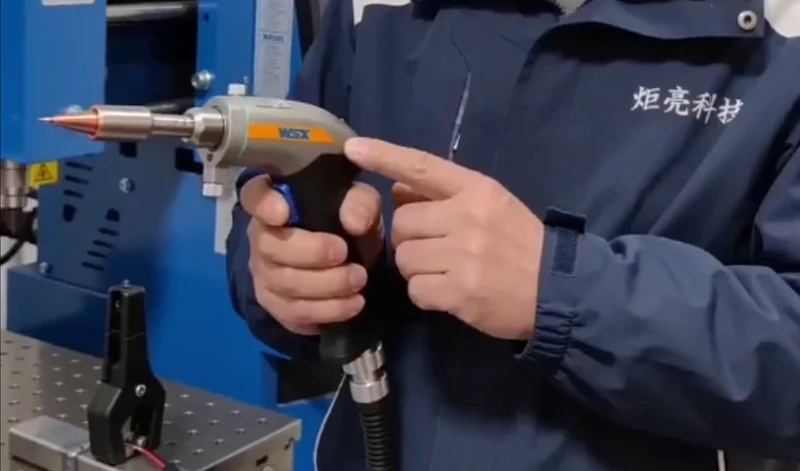
"Failure to emit laser beam" is a high-frequency fault encountered in production environments involving laser welding machines, directly resulting in production line stoppages. Based on extensive field engineering experience, this document outlines a systematic troubleshooting methodology-structured from "simple to complex" and "external to internal"-covering over 90% of common failure scenarios. It enables maintenance personnel to rapidly localize faults, resolve issues efficiently, and minimize risks associated with misoperation.
Guide for fine adjustment of laser cutter parameters
Guide for fine adjustment of laser cutter parameters
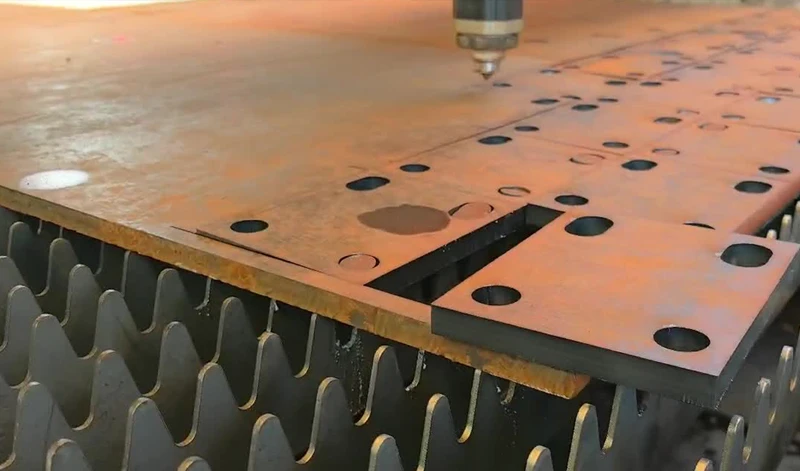
In stainless steel laser cutting, defects such as dross adhesion, burrs, and incomplete penetration directly compromise product quality and increase downstream processing costs. Drawing upon the field-proven expertise of senior process engineers, this article focuses on three core parameters-laser power, cutting speed, and assist gas-and systematically details precise adjustment methodologies and material-specific adaptation criteria. The objective is to equip operators with practical, actionable knowledge for rapid parameter optimization-achieving a 70% improvement in cutting surface quality and a 30% increase in processing efficiency.
Laser Cutting Machine Chiller Troubleshooting Comprehensive Guide (Practical Edition)
Laser Cutting Machine Chiller Troubleshooting Comprehensive Guide (Practical Edition)
The chiller for laser cutting machines is a critical auxiliary system ensuring stable and reliable equipment operation. Failures-such as alarm-triggered shutdowns or cooling inefficiency-can directly cause the laser module to activate thermal protection due to overheating, resulting in unplanned production line stoppages. Based on extensive field experience, this guide focuses on high-frequency faults-with particular emphasis on the E06 water-level alarm-and introduces a structured "Three-Step Troubleshooting Method" alongside essential daily maintenance practices. Its purpose is to empower operators to rapidly diagnose and resolve issues while significantly reducing fault recurrence.

Tips for Saving the Cutting Nozzle of the CNC Plasma Cutting Machine
Tips for Saving the Cutting Nozzle of the CNC Plasma Cutting Machine
Tips for saving on the cutting nozzle of a CNC plasma cutter: Extend lifespan by 50%+ and reduce material costs
The cutting nozzle is the core wear-prone component of a CNC plasma cutter, and its wear rate directly affects the cutting cost and production efficiency - a high-quality cutting nozzle can cost several hundred yuan. If not used properly, the monthly material expenses will increase significantly. Based on years of practical experience in the workshop, this article, from the four dimensions of "preparation before use, optimization during operation, maintenance after use, and equipment calibration", has compiled 10 practical saving techniques that can be directly implemented to help operators scientifically extend the lifespan of the cutting nozzle while ensuring cutting quality.

Flame CNC Cutting Machine Operating Procedure Guide (Practical Version)
Flame CNC Cutting Machine Operating Procedure Guide (Practical Version)
The flame CNC cutting machine is a combination of traditional flame cutting technology and a CNC system. It is mainly used for efficient processing of carbon steel and thick plates (≤ 200mm). It has three core advantages: low cost, simple equipment maintenance, and strong adaptability to thick plates. It is widely used in industries such as construction machinery, steel structures, and shipbuilding.
As an operator, the core value of mastering standardized operating procedures is:
Ensure the quality of the cutting (ensure the perpendicularity and roughness of the cut are up to standard, reducing rework);
Reduce safety risks (prevent gas leaks, fires, etc. from occurring);
Extend the service life of the equipment (reduce mechanical wear and gas path failures);
Improve production efficiency (standardize processes and reduce downtime).
This article covers the entire spectrum from "device cognition" to "operation procedures", "quality control", and "safety maintenance", providing direct and applicable operation guidelines that are suitable for on-site operator training and daily reference.

Laser welding machine three-parameter shorthand method: scanning width + peak power + center offset
Laser welding machine three-parameter shorthand method: scanning width + peak power + center offset
The coordinated matching of the three parameters - "scanning width, peak power, and center offset" - can prevent issues such as uneven weld width, insufficient penetration, and position deviation. Improper adjustment of a single parameter can lead to these problems. However, scientific adaptation can increase the welding qualification rate by over 90%. Based on laboratory-level practical data, this article dissects the adjustment logic, matching standards, and coordination tips for each parameter, helping operators quickly master the "learn and apply immediately" parameter setting skills.
