


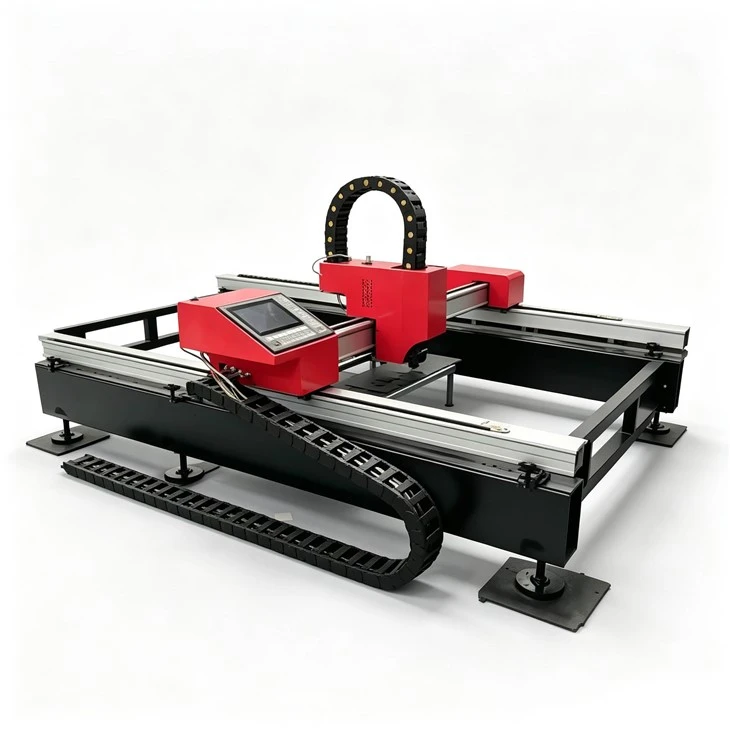
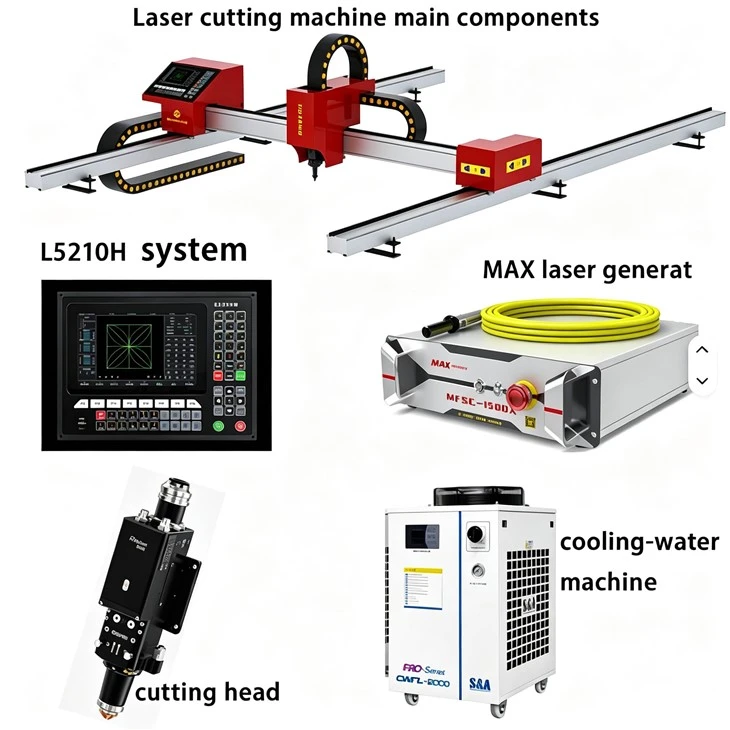
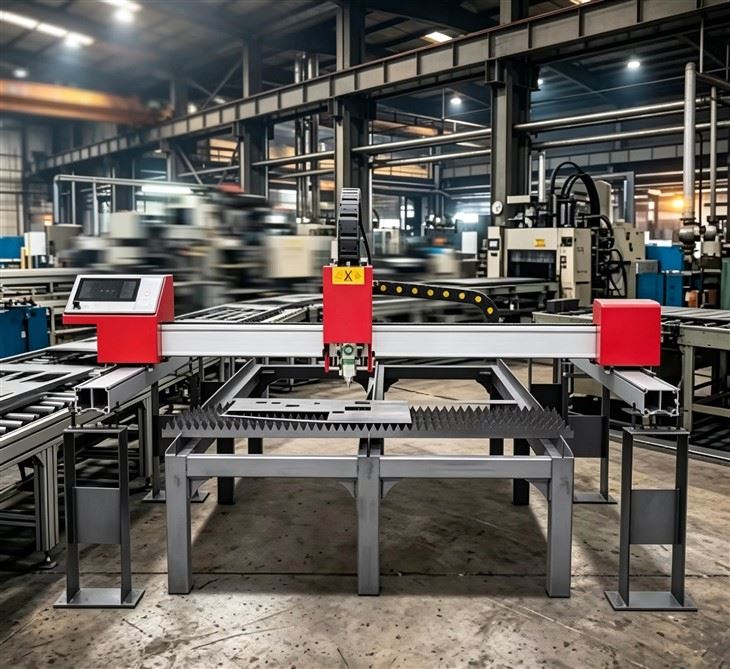
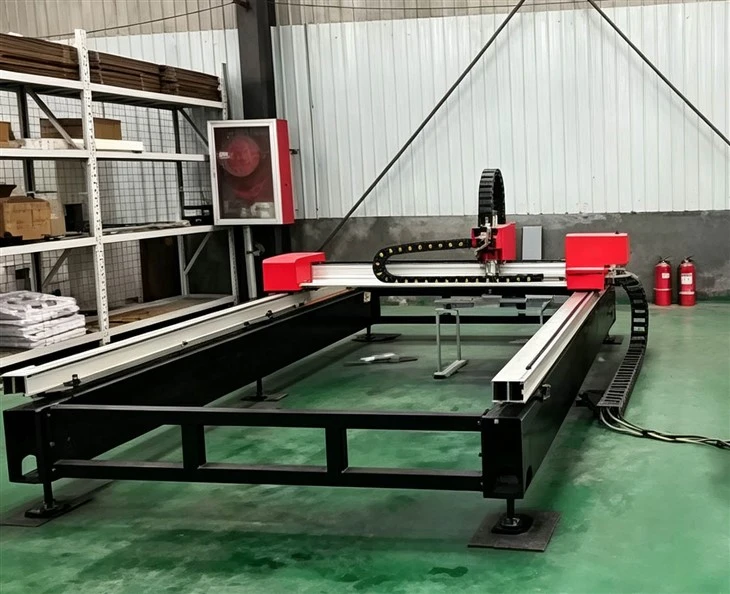

Hebei Juliang Technology Co., Ltd. is one of the leading manufacturers and suppliers of desktop fiber laser cutting machine in China. Please feel free to buy CE approved machinery made in China here from our factory. All customized machines are with high quality and competitive price.
What Exactly Fits on a Desk and Cuts Metal?
Here's a thought: what if you could have a laser cutter that doesn't demand a dedicated workshop bay, a reinforced concrete floor, or three-phase power? A desktop fiber laser cutting machine does exactly that – it puts industrial-grade metal cutting capability into a package that actually fits on a workbench. Think of it as the workshop version of a high-end desktop 3D printer, except it cuts through stainless steel, carbon steel, brass, and copper instead of just plastic.
The concept is straightforward: take all the proven advantages of fiber laser technology – clean cuts, narrow kerf, high speed – and shrink the form factor without compromising the essentials. The result is a machine that can sit alongside your other desktop equipment, plug into standard power, and start cutting metal within minutes of unpacking.
This isn't a toy. It's the same laser technology used in industrial systems, just scaled down for the work that actually needs doing in small spaces.

Rack and gantry - The key to small equipment
You might be surprised that many desktop machines use inferior racks because "it's just a small unit". This is a misconception. On desktop machines, the importance of the rack is no less than that of a 20-foot industrial system.
Our desktop fiber laser uses welded steel racks and is equipped with internal reinforcing ribs, exactly the same as our large equipment. It also undergoes high-temperature stress relief treatment - the frame is subjected to controlled heating and cooling cycles to eliminate internal stress. This effectively prevents deformation over long-term use, while cheaper machines usually omit this step, which can easily cause the cutting edge to gradually skew and is difficult to identify the cause.
This gantry is made of aerospace-grade aluminum and has a high rigidity-to-weight ratio. On desktop machines, this means faster acceleration and smoother movement, which is particularly important for complex patterns and tiny features.
The dual-drive system on the Y-axis prevents the cutting line from deforming during high-speed movement. In a single-drive system, the gantry may tilt slightly during high-speed operation, causing a deviation in the cutting angle, which is particularly problematic for small parts, as even a 0.1mm error can affect processing accuracy.
Precise gear-rack transmission ensures smooth and precise movement. For desktop machines, this is not superfluous - it determines whether the parts can be processed smoothly or require rework.
Who Actually Buys a Desktop Fiber Laser?
I see these machines in some interesting places.
Jewelry studios – Cutting precious metals for custom pieces. The precision and narrow kerf allow intricate designs that would be impossible with traditional methods.
Electronics manufacturers – PCB stencils, enclosures, connectors, and small component parts. The accuracy matters for fit and function.
R&D labs and prototyping facilities – Quick-turn parts without leaving the building. Iterate designs in hours instead of days.
Educational institutions – Teaching laser technology in a safe, manageable format that fits in a classroom.
Medical device prototyping – Small, high-precision metal components with tight tolerances.
Architectural model makers – Scale models with accurate metal components. Clean cuts, minimal finishing.
Watchmaking and micro-engineering – Extremely fine detail on small components.
Small manufacturing startups – Getting started with in-house cutting capability without a massive capital outlay.
University research labs – Experimenting with laser processing on various metals.
The common thread is precision and small part size. If your parts fit within a 600mm square, a desktop machine handles them efficiently.
Our Certificate

CE

CE

UMP

UMP
FAQ

01.Is a desktop fiber laser capable of cutting the same materials as a large industrial laser?
The same materials, yes – but within thickness limits. A desktop machine handles thin to medium gauge work (typically up to 3-4mm steel, depending on power). The cut quality is the same; the capacity is smaller.
02.How much setup is required for a desktop machine?
The machine is delivered as a complete unit. Setup involves placing it on a stable workbench, connecting power, connecting the assist gas supply, and running initial alignment and calibration. Most installations are operational within a day.
03.What's the typical learning curve for operators?
Someone familiar with CAD/CAM software can get up to speed in a few days. The software is user-friendly with standard file import. Training is recommended – we provide it during installation.
04.How often does the machine need maintenance?
Regular maintenance includes lens cleaning (inspect every 8 operating hours), checking focus, and ensuring the cooling system is clean. The laser source itself requires no scheduled replacement for years.

Who We Are – Hebei Juliang Technology Co., Ltd.
We've been manufacturing laser cutting systems for over a decade. Our factory in Hebei, China, controls the entire production chain – from raw material selection to final testing.
Our export experience covers Malaysia, India, Mexico, Turkey, Saudi Arabia, Brazil, and many other countries. Each machine meets CE certification standards.
Our quality control involves testing every machine on actual cutting jobs before it leaves the factory – not just a power test, but cutting customer sample files to verify edge quality and dimensional accuracy.


Hot Tags: desktop fiber laser cutting machine, China desktop fiber laser cutting machine manufacturers, factory


