


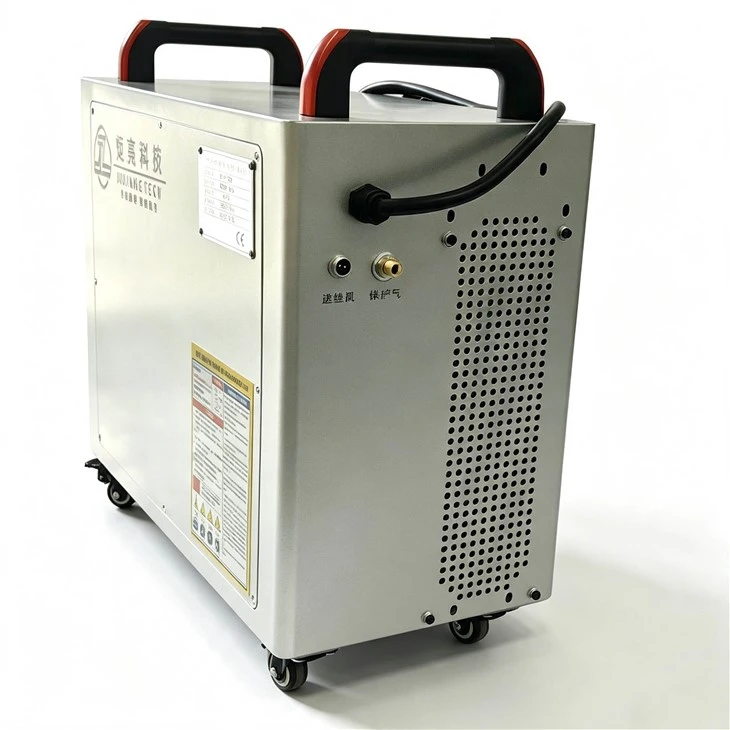
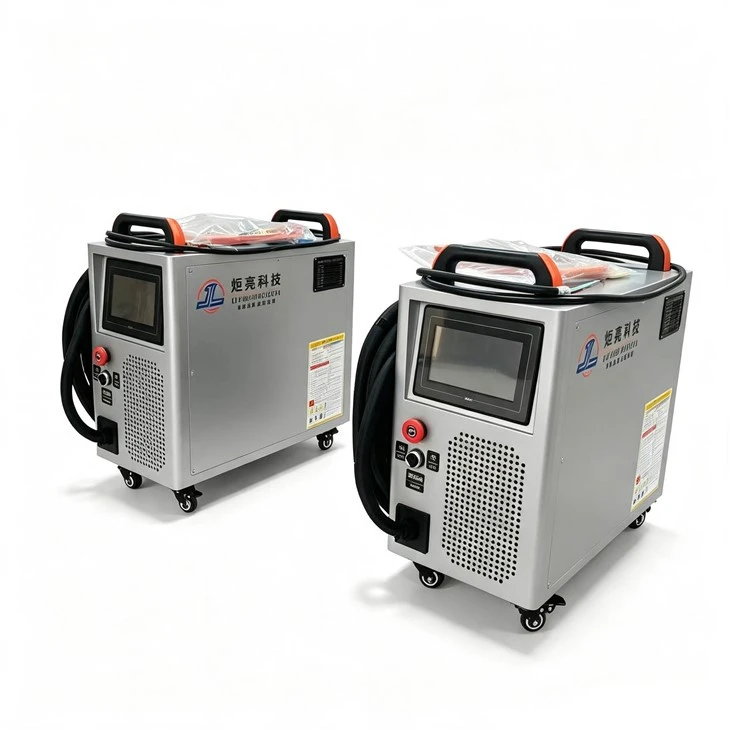
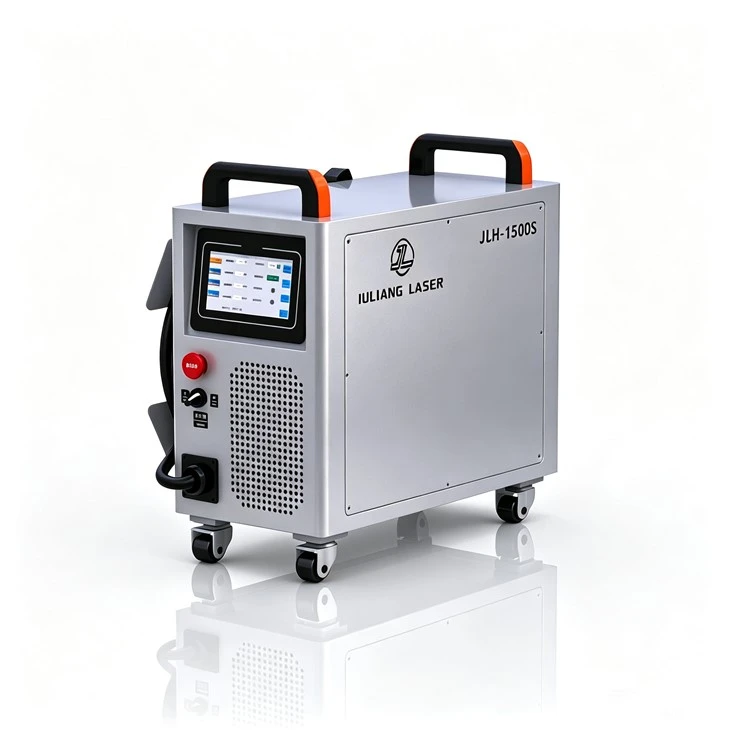
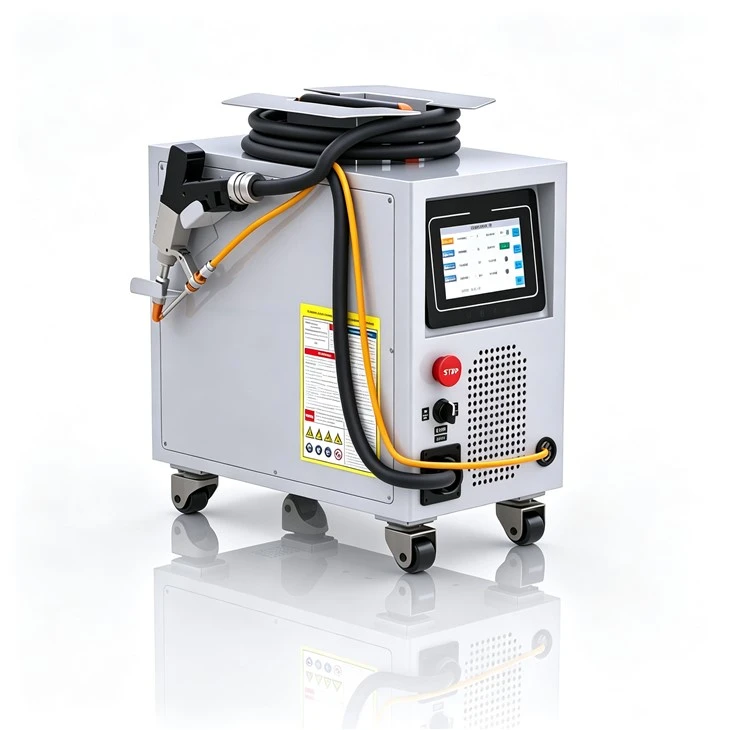
Hebei Juliang Technology Co., Ltd. is one of the leading manufacturers and suppliers of fiber laser welder in China. Please feel free to buy CE approved machinery made in China here from our factory. All customized machines are with high quality and competitive price.
Fiber Laser Welder
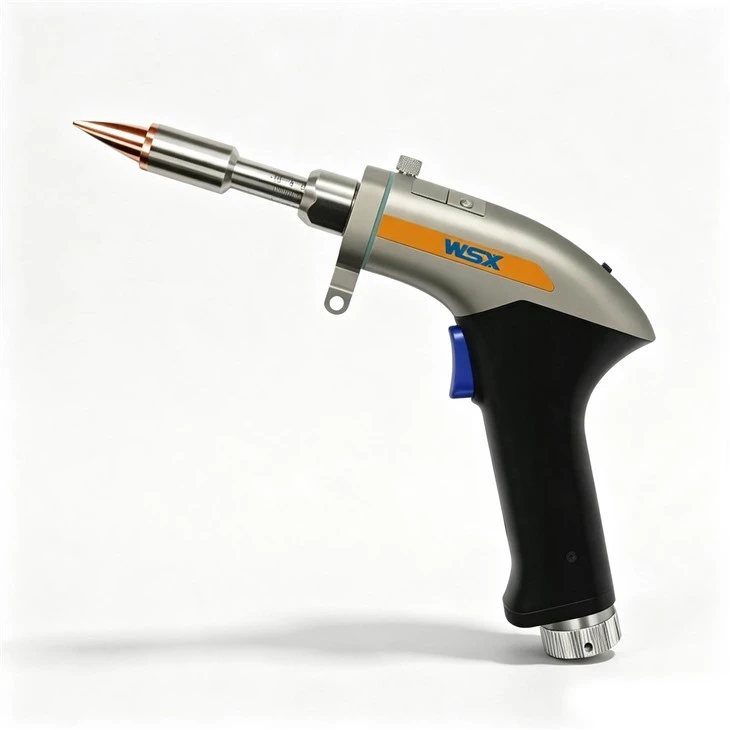
If you're running a metal fabrication shop and still welding stainless sheet, aluminum enclosures, or carbon steel brackets with TIG, you already know the frustrations. Good TIG welders are scarce, the work is slow, and thin materials warp constantly. A fiber laser welder takes a completely different approach. Instead of an electric arc, it uses a focused beam of light generated within an optical fiber and delivered through a flexible cable to a handheld welding head. That beam melts the base material and any filler wire simultaneously, producing a weld that's narrow, strong, and typically needs little to no cleanup afterward.

Design Choices That Actually Matter
Manufacturers often cut corners in areas that significantly impact a machine's longevity, and this is where we differ.
For the welding head, material choice is key. While some use standard aluminum alloys for the housing, we opt for aerospace-grade aluminum that's properly anodized. This anodizing protects against scratches and daily wear, preventing the premature degradation you see in cheaper heads within months.
Optical component quality is also critical. The lenses and mirrors within the head play a huge role. Inferior optics absorb excess laser energy, overheat, and degrade quickly. We use optics with high-damage-threshold coatings designed specifically for 1080nm lasers, which greatly extends their lifespan.
Regarding the cooling system, design is paramount. Air-cooled systems require appropriately sized heat sinks and quality fans. We've encountered units with undersized fans that cause thermal shutdowns on warmer days. Our cooling systems are slightly over-engineered; this initial investment prevents costly downtime.
Finally, cable management-how the fiber, power, and gas lines are bundled and strain-relieved-directly affects durability. We utilize reinforced cable assemblies with robust strain relief at both connection points.
What Can Go Wrong
1. Protective lens contamination. This is the biggest culprit. The lens can get covered in spatter and dust, which messes with weld quality. If you miss it, the laser beam can scatter and harm the focusing optics.
The fix: Inspect the lens daily, clean it thoroughly with lint-free wipes and isopropyl alcohol, and swap it out when it gets pitted.
2. Cooling system malfunction. Air-cooled units lose effectiveness when their heat sinks get clogged with dust. Water-cooled systems can fail if the water quality drops.
The fix: Clean air filters weekly, only use deionized water in water-cooled systems, and keep an eye on fluid levels.
3. Fiber cable damage. This happens when the cable gets crushed, kinked, or cut, leading to costly repairs.
The fix:Train your operators to handle the cable with care, position it away from busy areas, and check the outer sheath monthly.
4. Subpar weld quality due to wrong settings.While machines have presets, they're just a starting point, not ideal for every scenario.
The fix: Test your settings on scrap material before each production run and keep a record of what works best for different jobs.
Installation and Setup
Here's what the process actually looks like:
Unpack the machine and position it on a stable cart or workbench.
Allow adequate clearance around air intakes for air-cooled systems.
Connect power-most units run on single-phase 220V.
Connect shielding gas supply.
Power on, run through initial setup, and test on scrap material.
Installation usually takes one to two days, including operator training. Our technicians handle the setup and make sure your team is comfortable running it before they leave.

Common Problem
How long does a protective lens last?
It depends on usage. In clean conditions with good gas shielding and proper technique, a lens can last several weeks. In heavy production with lots of spatter, you might replace it every few days. The key is checking it daily and cleaning it properly-if you wait until it's visibly damaged, you risk damaging the expensive optics behind it.
Do I need to change my welding fixtures?
You might. Laser welding requires tighter fit-up than TIG because the beam is so focused-it won't bridge gaps as easily. Your fixtures need to hold parts closer together. The wobble function helps with this by widening the effective spot, but good fit-up still matters.
Does the Fiber Laser Welder require special ventilation?
It produces metal vapor and fume, similar to TIG. You'll need proper extraction-the same system you use for TIG will work. Shielding gas is required (argon or mix). The gas consumption rate is similar to TIG at comparable settings.
What's included in the warranty?
One year on the machine, two years on the laser source. We provide 24/7 remote video support. If parts are needed, we ship them and guide your team through replacement. Return-to-factory repairs follow a standard process with clear communication.


Hot Tags: fiber laser welder, China fiber laser welder manufacturers, factory, 1 handheld metal laser welding machine, a handheld laser welder, air cooled fiber laser welder, air cooled handheld fiber laser welder, air cooled handheld laser welder, air cooled laser welder


