



Hebei Juliang Technology Co., Ltd. is one of the leading manufacturers and suppliers of heavy‑duty side‑mounted tube cutter in China. Please feel free to buy CE approved machinery made in China here from our factory. All customized machines are with high quality and competitive price.
What This Machine Is Built For
This is a tube cutter that works from the side instead of from above. The laser head sits horizontally, firing into the tube rather than down onto it. That orientation change might sound minor, but it makes a real difference in how the machine performs. Tubes sit lower to the ground with a lower center of gravity, so they spin more steadily. Less vibration means cleaner cuts, especially on longer sections where wobble would otherwise degrade the edge. The side layout also lets the front chuck pull back, allowing the cutting head to reach closer to the tube end. That leftover stub at the end of each bar gets shorter. When you're running thousands of tubes, those saved inches turn into saved material cost.
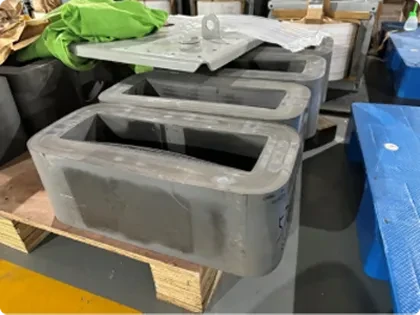
The frame on this machine is heavier than you'll find on most competitors. We use thicker steel plate-not because it looks impressive, but because mass dampens vibration. When a tube spins at speed, the machine wants to shake. A heavier frame absorbs that energy instead of transmitting it to the cutting head.
The welding process on the frame is controlled carefully. After welding, the entire assembly goes through a stress-relief cycle in a furnace. The temperature comes up slowly, holds at a specific level, then drops gradually. This removes the internal stresses that welding creates. Skip this step and the frame will move during machining-not enough to see, but enough to affect the optical alignment over months of operation. We've seen machines from other manufacturers that skipped stress relief, and the alignment drift shows up in cut quality after about a year.
The mounting surfaces where the linear guides attach get machined flat, then coated. The coating prevents rust and pitting. Pitted surfaces let components shift, and shifted components mean lost accuracy.
Low-Slung Bed
The bed sits lower than typical designs. A tube closer to the floor is more stable during rotation.
Self-Adjusting Chucks
The clamping system centers the tube automatically. Consistent clamping pressure is essential for consistent cuts.
Active Support System
A servo-controlled support follows the tube during rotation, reducing sag and vibration on long sections.
Scrap Reduction
The cutting head reaches closer to the tube end, reducing leftover material on each tube.
Where This Machine Goes to Work
A pressure vessel fabricator was cutting heavy-wall pipe for tank construction. They used a band saw and then machined the ends on a lathe. Each joint took about 15 minutes of prep work. The laser cutter reduced that to under two minutes per end. The cut surface came out smooth enough to weld directly. The fabricator eliminated the lathe operation completely for tube ends.
A mining equipment supplier needed consistent tube cuts for conveyor structure. The previous process used a portable bandsaw with layout marks. Every piece had to be measured and marked individually. The laser system accepts CAD files directly. No marking, no measuring, no human error.
A trailer manufacturer cuts chassis tubes for flatbed trailers. The lengths and angles vary by model. With the laser, they change programs in seconds. The old process required changing saw setups and re-measuring. Changeover time dropped from 20 minutes to under two minutes.
This machine has limits. If you cut solid bar, don't buy it. If your volume is under 500 tubes a month, the numbers probably don't work. We'll tell you that before you order.
Specifications
| Parameter | Standard Configuration |
|---|---|
| Round tube capacity | 15 – 500 mm diameter |
| Square tube capacity | 15 – 500 mm width |
| Tube length capacity | 5.5 – 6.5 m |
| Laser power options | 1 kW to 6 kW |
| Positioning accuracy | ±0.05 mm |
| Repeatability | ±0.03 mm |
| Max rotation speed | 50 rpm |
| Control type | CNC with bus control |
| Cooling method | Water chiller |
FAQ
1. What does "heavy-duty" actually mean in this context?
It means the frame uses thicker steel plate and more substantial components throughout. The weight dampens vibration better than lighter designs. The machine also has higher torque servos to handle heavier tube loads. It's built for continuous production, not occasional use.
2. How does the cut quality compare with a saw cut?
Laser cuts are cleaner and require no deburring. The edge surface finish is smoother, and the kerf width is much narrower. Saws leave burrs and require secondary cleaning. Laser cuts are typically weld-ready.
3. Can this machine handle tubes with surface rust or mill scale?
Yes, within reason. Light surface rust and mill scale don't significantly affect cutting. Heavy scale or pitting can absorb beam energy and affect cut quality. We recommend abrasive removal for heavily scaled material.
4. How much does installation typically cost?
Installation cost depends on your location and site conditions. On our end, we charge a fixed on-site service fee. Your local electrical contractor handles power connection and any building modifications. We can give you a total cost estimate after we review your site.
5. What's the power requirement for a typical installation?
A 4 kW system needs 380V three-phase power at about 40 kVA. You'll also need compressed air at 6–8 bar and about 1.5 m³/min flow. We provide a detailed electrical specification sheet for your electrician.
6. What happens if the machine breaks down?
We keep replacement parts for common failure items. Most issues are diagnosed remotely via video call. For critical failures, we ship replacement parts immediately. On-site service is available if remote diagnosis isn't sufficient.
7. How long does the machine last with proper maintenance?
With regular maintenance, the machine body lasts 15–20 years. The laser source typically needs replacement at 80,000 operating hours. Servos and drives last 10–15 years. We still support machines we built in 2015.
8. Do you offer operator training?
Yes. Remote training is included. We provide video tutorials covering daily setup, operation, and basic troubleshooting. On-site training is available for an additional fee. Most operators become productive within a few days.
9. Can this machine cut both miter angles and straight cuts?
Yes. The software handles miter cuts, notches, holes, and complex tube intersections. You program the geometry in the CAD software and the machine executes the cuts. No mechanical adjustment is needed for different angles.
10. What's the scrap rate reduction compared with saw cutting?
Typical reduction is 20–30 mm per tube end. For a shop cutting 50,000 tubes annually, that saves about 1,000 meters of tubing per year. At current steel prices, the savings cover a significant part of the machine payment.


Hot Tags: heavy‑duty side‑mounted tube cutter, China heavy‑duty side‑mounted tube cutter manufacturers, factory, cnc pipe laser, laser cut tube machine, laser pipe cutting machines, laser steel tube cutting machine, Laser Tube Cutter For Round And Square, side mounted laser pipe cutting machine


