


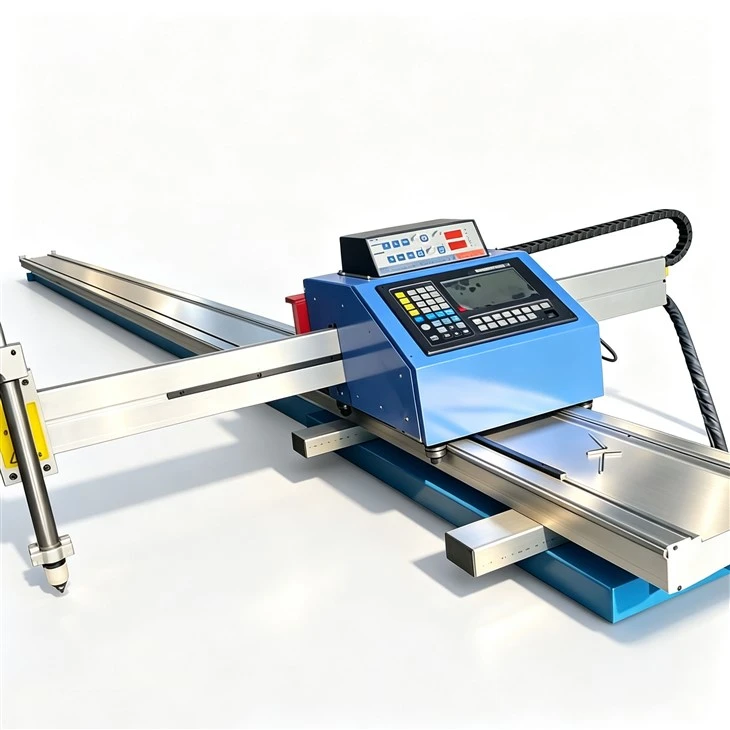
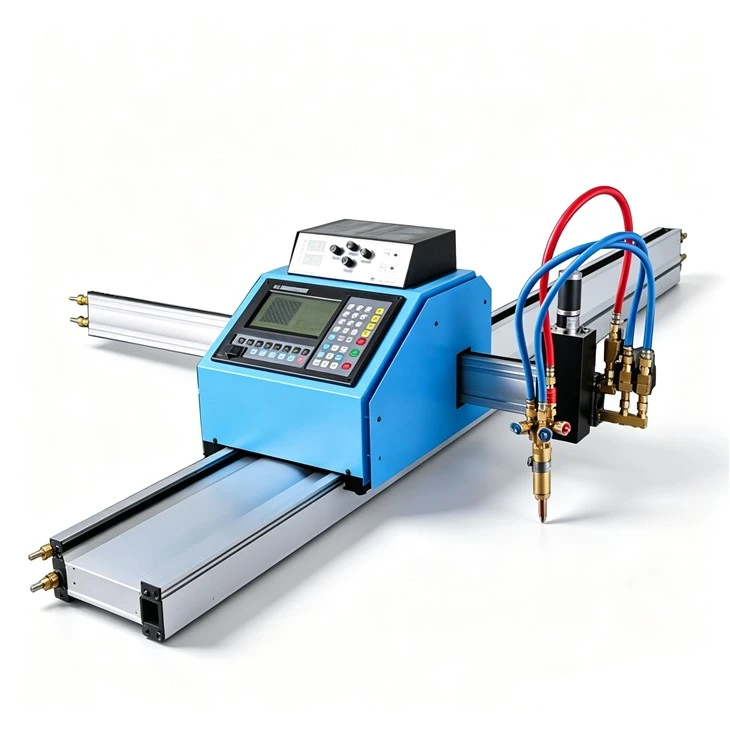
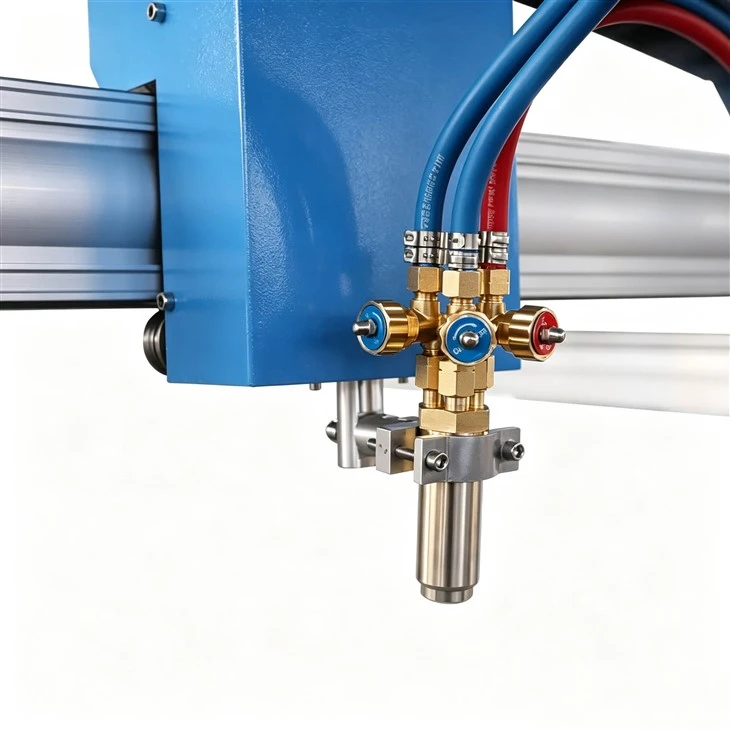
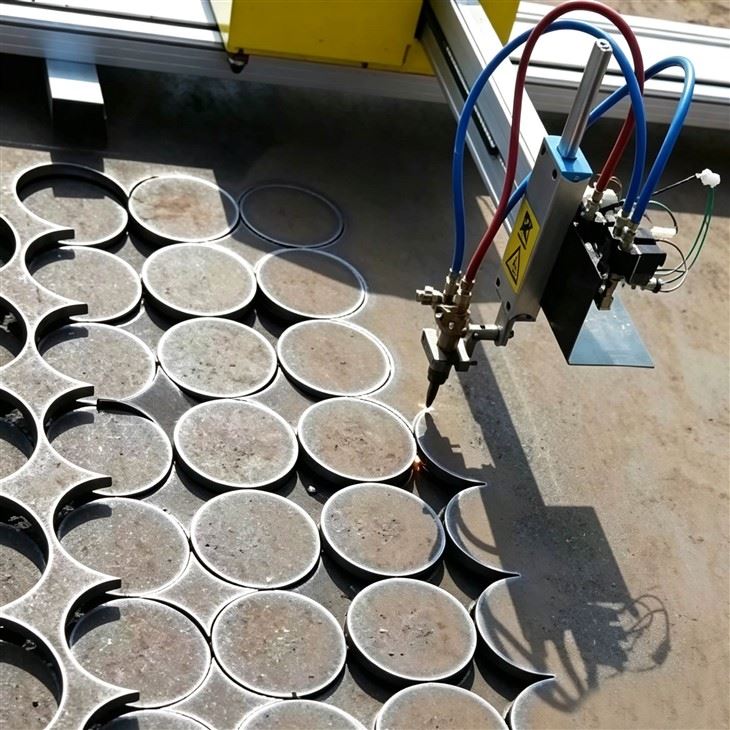
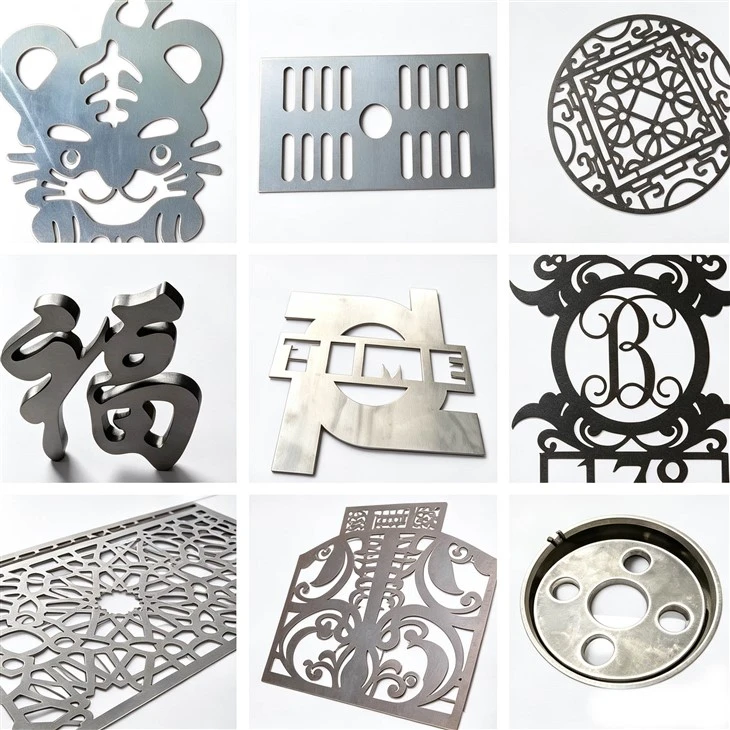
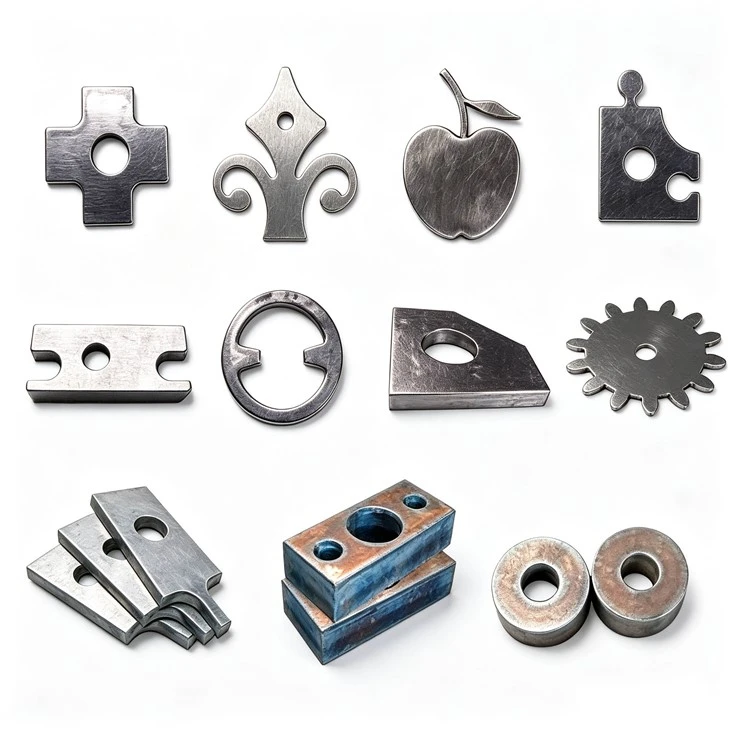
Hebei Juliang Technology Co., Ltd. is one of the leading manufacturers and suppliers of cnc portable cutting system in China. Please feel free to buy CE approved machinery made in China here from our factory. All customized machines are with high quality and competitive price.

Most fabrication shops have a fixed cutting table where all metal pieces are brought. This CNC Portable Cutting System reverses that idea. It's a small, computer-controlled laser cutter you can bring to the work instead of moving the work to the machine. Perfect for on-site repairs for mining gear or any situation where you don't have 200 sq ft for a cutting setup, it cuts mild steel up to 10mm, stainless up to 8mm, and aluminum up to 6mm. It offers repeatable accuracy within ±0.1mm.
The real game-changer here is the air-cooled laser source. Forget water chillers, coolant upkeep, or the worry of freezing pipes in a cold workshop overnight. Just plug it in, dial in your settings, and start cutting. This design significantly cuts down on both the space needed and the routine maintenance compared to traditional heavy-duty systems, making it a truly practical solution for smaller businesses.

Most product pages tell you what a CNC Portable Cutting System can cut. Let's talk about what happens when you cut the wrong material with the wrong settings.
Mild steel is the most forgiving. Up to 10mm thickness, this machine handles it cleanly with standard parameters. The trick is consistent travel speed-too slow and you get excessive slag buildup, too fast and the cut doesn't fully penetrate. We generally recommend starting at 80% power for 6mm and adjusting from there based on your specific material batch.
Stainless steel demands more attention. It retains heat differently than mild steel, so you need to manage your feed rate more carefully. The upside is that cut edges on stainless tend to come out cleaner, often requiring little to no post-processing. The air-cooled design helps maintain consistent beam quality, which matters more with stainless than with mild steel.
Aluminum is the tricky one. Reflective and thermally conductive, it'll punish inconsistent technique. Higher frequency settings combined with slightly faster traverse speeds tend to produce better results. Keep your focal point accurate-this matters more with aluminum than with steel.
Galvanized sheet is the one material we advise caution on. The zinc coating creates fumes that affect cut quality, and you'll be changing nozzles more frequently. If you're cutting galvanized regularly, invest in good extraction and accept the consumable cost.
Hebei Juliang Technology is a high-tech equipment manufacturing enterprise that integrates R&D, production, sales, and global after-sales services. It focuses on the field of metal cutting and welding equipment and is dedicated to providing customers worldwide with cost-effective integrated processing solutions. The factory is located in the industrial equipment manufacturing cluster area in North China and has standardized production workshops, achieving full control over the entire process from component processing, core component assembly, machine debugging, and factory inspection. The factory ensures the product quality of each machine from the source.
The company has established a professional technical R&D team, adheres to independent technological iteration, holds a number of utility model patents, continuously refines product performance based on actual market conditions, and continuously optimizes equipment stability and operation experience. After years of development, it has formed a complete product matrix, covering portable CNC cutting machines, gantry CNC cutting machines, laser pipe cutting machines, handheld water-cooled laser welding machines, plasma cutting power supplies, laser cleaning machines, and other types of equipment. These equipment are widely applicable to steel structure processing, construction machinery, sheet metal cutting, and shipbuilding, and can meet the lightweight production needs of small and medium-sized enterprises, as well as the high-intensity operation conditions of large factories. At the same time, it supports moderate customization adjustments to adapt to different production scenarios.
Quality control runs through the entire production process. After each machine is assembled, it must undergo long-term continuous testing, precision calibration, aging stability tests, and all parameters must meet the standards before being packaged and delivered to customers. The factory does not engage in simple low-price competition. It prioritizes equipment durability, cutting and welding accuracy, and long-term operation stability, strictly controls component procurement and assembly processes, and reduces the probability of customer faults in the later stage.
In the domestic market, Juliang has established a nationwide service system. Technical engineers can provide on-site installation and commissioning, operator training, and regular maintenance services to help customers quickly get familiar with the equipment and solve various problems in the production process. With the continuous expansion of foreign trade business, the products are exported to countries and regions around the world. With outstanding product strength and competitive prices, it has gained the trust and praise of a large number of overseas customers.
Since its establishment, Juliang Technology has always adhered to the business philosophy of putting customers first and being honest-based. It is guided by market demands, continuously increases R&D investment, refines product details, and improves the supply chain system. In the future, the company will continue to focus on the cutting and welding equipment field, refine domestic high-quality industrial equipment, connect domestic and overseas markets, and strive to become a reliable equipment manufacturing partner trusted by global customers, working together with all partners for mutual success.
The Engineering Behind the Frame
One of the most overlooked aspects of portable cutters is what happens to the frame after you've moved it a hundred times. We weld our frames with stress-relief treatment, then machine the rail mounting surfaces post-treatment. It sounds like manufacturing overkill, but here's the real-world payoff: the machine holds its calibration longer. A unit that skips this step might start drifting after six months of job-site use. Ours stays true for years. That's the difference between a tool that's portable and a tool that's reliably portable.
When you receive the unit, it arrives in two main components: the gantry assembly and the control box. Assembly takes two people about half a day.
Unpack and inspect – Check for shipping damage before signing anything. The gantry rails are precision-ground. Impact damage isn't always visible to the naked eye but will show up in accuracy.
Mount the rail system – This is the critical step. Rail alignment determines cut accuracy. A dial indicator helps you verify parallelism within 0.05mm per meter.
Connect the control box – Standard 220V single-phase power. No special electrical work required. The compact design simplifies integration into existing shop layouts.
Load the software – The control system runs on Windows-based CAM software with a 7-inch touchscreen interface. A basic shape library is pre-loaded, but you'll want to import your own cutting profiles.
Calibration run – About an hour of test cuts on scrap material to dial in focal height and speed settings for your specific material types.
Product Features
Compact integrated frame – The gantry structure is built as a single rigid unit. Compared with bolted-together designs, this eliminates alignment drift over time. The trade-off is slightly higher shipping weight, but we think the long-term stability is worth it. This is particularly important if you're moving the machine between job sites where it'll get bumped around in transit.
High cutting precision – We hold ±0.1mm accuracy on this unit. That comes from the combination of precision-ground rails, properly tensioned drive belts, and a control system that compensates for thermal drift. In practice, this means your parts fit together the first time without grinding or rework.
Low maintenance cost – The air-cooled laser source eliminates the cooling system maintenance that drives up total ownership costs on water-cooled units. No coolant changes, no pump replacements, no freeze protection. Consumable costs are limited to nozzles and lenses-both of which are inexpensive and readily available.
Energy-saving laser source – The 1200W source draws less power than comparable systems while still providing sufficient output for most fabrication work. In a shop environment, that adds up to real savings on the power bill over the course of a year.
Stable servo transmission – The servo motors hold position reliably even under load. In practice, this means sharp corners and consistent hole shapes across multiple parts. The drive system doesn't lose steps, which is a common failure point on lower-end systems.
Easy installation – Two people can set this up in half a day without special tools. The control box connects to standard 220V power. No specialized electrical work, no crane required for assembly.
What exactly is a CNC Portable Cutting System, and what does it do?
It's a computer-controlled laser cutter mounted on a movable gantry frame. You import a design file, set material parameters, and the machine follows the programmed path to cut metal shapes. Unlike stationary systems, you can move this unit to different job sites or around the shop as needed. The air-cooled source eliminates water cooling maintenance.
How do I decide between air-cooled and water-cooled laser systems?
Air-cooled is lighter and lower maintenance-no coolant changes, no pump failures, no freeze risk-but limited to about 1200W output. Water-cooled handles higher power but weighs more and needs regular cooling system maintenance. If you need mobility or primarily cut up to 10mm thick material, air-cooled is the practical choice.
What industries use this type of cutter most?
We see highest adoption in structural steel fabrication, bridge repair and maintenance, mining equipment repair, small fabrication shops with limited floor space, and off-road/racing fabrication. These users share common needs: mobility, quick setup, and the ability to cut various metals without owning an industrial cutting department.
Does Juliang provide technical support and training?
Yes. Field engineers are available for remote video support. Most installations go smoothly with our written guidance and one video call. For on-site support, we can arrange a service visit. Service support starts at the moment of purchase-not at the moment something breaks.
What's the warranty coverage?
The complete machine carries a 1-year warranty, with the laser source covered for 2 years. This covers manufacturing defects and premature component failure. Consumables-nozzles, protective windows, ceramic rings-aren't covered beyond initial supply. We maintain spare parts inventory and can ship replacements quickly to minimize downtime.
Mr. Zhang, a seasoned professional with eight years in hardware and steel structure processing, runs a compact manufacturing workshop. His specialty lies in sheet metal cutting and fabricating custom parts. For quite some time, his business ran smoothly, with a small team of skilled workers using manual and template-guided methods. However, the industry has become much tougher lately. Customers now expect greater precision and a polished finish on parts. Plus, there's more pressure on pricing and tighter delivery schedules than ever. The limitations of traditional manual cutting methods became glaringly obvious, causing significant operational headaches for Mr. Zhang.
The biggest challenge Mr. Zhang faces is the inconsistency that comes with manual cutting. Human error inevitably leads to rough edges and inaccurate dimensions. This means a lot of time spent on sanding and finishing after every job, which really slows down production. When it comes to tricky shapes like circles, curves, or irregular designs, manual work just can't deliver the accuracy needed. This forces him to pay higher costs to have these parts made by larger manufacturers. Not only does this drive up processing expenses, but it also means he's often at the mercy of unpredictable outsourcing timelines, leading to frequent delays and lost repeat business. On top of that, manual cutting wastes a lot of material, lowers raw material efficiency, and increases labor costs, constantly eating into the workshop's profits.
To overcome these issues, Mr. Zhang decided to invest in CNC cutting equipment. However, after looking at several large, stationary cutting machines, he kept putting off the decision. These machines are pricey, take up a lot of space-which his small workshop doesn't have-and are complicated to set up and operate, making it hard for his regular staff to learn quickly. Furthermore, the ongoing maintenance costs are very high, making them impractical for smaller operations.
During an industry event, he discovered Julliang's portable CNC cutting machine and immediately recognized it as the perfect fit for his workshop. It's lightweight and mobile, meaning it doesn't need to be permanently installed. He can simply place it directly onto steel plates, removing the need for dedicated workstations and fitting perfectly into his limited space. After comparing various brands, he found Julliang's machine offered better accuracy and stability than comparable models in its price range. It can handle both oxy-fuel and plasma cutting, allowing him to work with carbon steel, stainless steel, and many other materials-covering almost all his production requirements.
Once the purchase was made, the manufacturer sent technicians to set up and calibrate the machine on-site, providing practical training. The system is user-friendly and automated: you just load design files from a computer, and the cutting starts automatically. Even workers with no prior experience can learn to operate it within half a day. Since they started full production, the workshop's efficiency has soared. The high-precision, clean, smooth cut edges mean no extra finishing work is needed, which significantly boosts how efficiently they use raw materials.
Now, the workshop handles all custom and standard sheet metal components in-house, completely cutting ties with outsourcing. Their delivery times have more than doubled, while labor and consumable expenses have dropped significantly. The consistent quality of their products has impressed customers, leading to a steady rise in repeat orders. A single Julliang portable CNC cutting machine, offering great value and flexibility, has successfully solved this small workshop's production challenges, solidifying its position in the market.


Hot Tags: cnc portable cutting system, China cnc portable cutting system manufacturers, factory, 220v plasma cutter, Portable 220V CNC Plasma Cutting Machine, portable cnc flame cutting machine, portable cnc flame plasma cutting machine, portable cnc laser cutting machine, portable cnc plasma and profile cutting machine


