


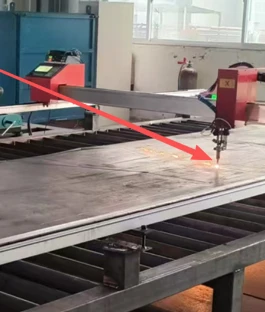
Hebei Juliang Technology Co., Ltd. is one of the leading manufacturers and suppliers of light gantry cnc plasma cutting machine for metal sheet in China. Please feel free to buy CE approved machinery made in China here from our factory. All customized machines are with high quality and competitive price.
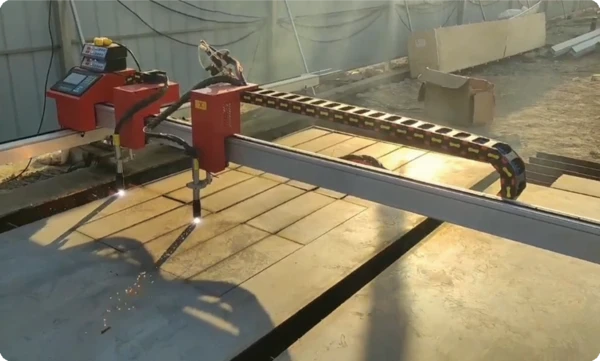
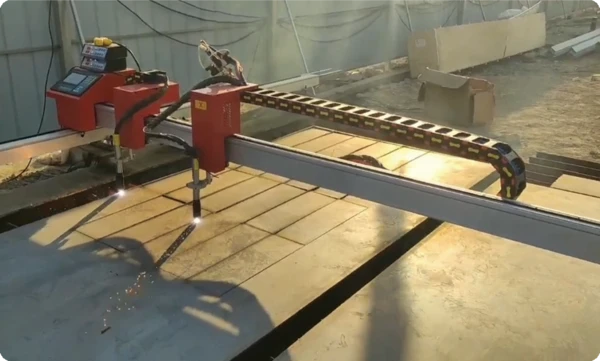
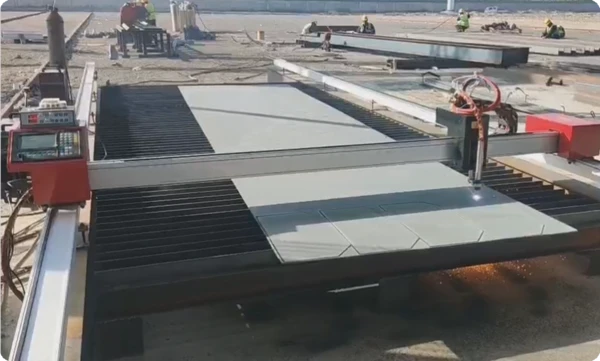
The light gantry CNC plasma cutting machine is precisely as its name suggests: a computer-controlled system on a moving gantry frame, engineered to cut sheet metal using a plasma torch. The concept is simple: you provide a digital design, the machine guides the torch over the metal sheet, and the plasma does the cutting. This thermal method uses ionized gas and an electrical arc to melt through conductive materials such as steel, stainless steel, and aluminum.
Its main benefit compared to manual cutting or older mechanical methods is reliability. After setting the right parameters for your material and thickness, the machine will replicate the cut identically on each piece. This means no operator fatigue, no uneven edges, and no need for corrections due to human error. While it might not be the answer for every single task, it's an excellent choice for repetitive production work.

team introduction

The construction philosophy here is practical: a rigid enough frame to maintain accuracy, without making the machine so heavy that it becomes impractical to install or move around a shop. The gantry uses a bilateral drive system-motors on both sides pulling the beam along the tracks . This is important because it prevents the kind of skewing that can happen with single-side drive when the machine runs at higher speeds.
The beam itself is typically fabricated from high-strength steel sections with internal stress relief . The tracks use precision rack and pinion gearing for movement, and the longitudinal rails are laid on a welded base structure . What you get from this combination is a platform that maintains cutting accuracy without requiring a massive concrete foundation-something shops with limited floor space tend to appreciate.

The material consideration: why this matters for cut quality
Here's where a lot of buyers overlook the details. Different metals react differently to plasma cutting, and the machine's components need to handle that.
For mild steel, the machine cuts cleanly with compressed air or oxygen as the plasma gas. The arc voltage stays stable, and you get a nice, square edge up to about 25mm thickness. Above that, you'll see the cut angle start to slope-it's physics, not a machine defect.
For stainless steel, you want nitrogen or an air/nitrogen mix for the plasma gas. The cut quality is good, but the dross (that re-solidified metal along the bottom edge) tends to be harder than on mild steel. Shops that cut a lot of stainless usually budget more for consumables or invest in higher-spec power sources.
For aluminum, the thermal conductivity is different-it pulls heat away from the cut zone faster. The machine handles it fine, but you need to run at higher power settings and adjust cutting speed accordingly. Ignore this, and you'll end up with excessive dross or incomplete cuts on thicker plates.
Installation and getting it running
The machine arrives as a modular assembly-the main bed sections, the gantry beam, the control console, and the torch stations. Installation isn't a one-hour job, but it's manageable with a basic shop crane or forklift.
The main installation steps:
Floor prep: The surface needs to be level within about ±2mm across the table length. Good enough for most workshop floors.
Bed assembly: The sections bolt together at the joints. The track alignment is what matters most here-misalignment shows up as inconsistent cut quality across the table.
Gantry placement: The beam sits on the rails. This is where you check the rail parallelism and squareness.
Cable routing: Drag chains protect the power and signal cables as the gantry moves.
Initial power-up: You'll run through the axis homing and configure the torch height control.
The height control system is worth mentioning because it's often misunderstood. The arc voltage automatically adjusts torch height as the plate surface varies . This prevents crashes on uneven material and keeps the cut quality consistent. Most operators get comfortable with the system within a couple of days of use.
What's the difference between plasma cutting and oxy-fuel cutting on this machine?
Plasma uses ionized gas and an electrical arc, which makes it faster on thinner materials up to 35mm. Oxy-fuel burns oxygen with a fuel gas and is slower but cuts much thicker-up to 200mm. The machine supports both, so you choose based on thickness and material.
How do I select the right plasma power rating for my work?
For cutting up to 12mm mild steel, a 100A power source is sufficient. For 20mm thickness, go to 200A. For 35mm, you're looking at 300A or 400A. Choose based on the thickest material you cut regularly, not the occasional exception.
Do I need to prepare the steel plate before cutting?
The machine has automatic torch height control that adjusts for surface variations, so you don't need to level the plate. Keep the surface clean of heavy rust or scale-it affects cut quality and speeds up consumable wear.
How much floor space does the machine require?
Add about 0.5 meters of clearance on all sides for maintenance access. The rail length and width determine the basic footprint-check the dimensions for your configuration.
Is training included, and how long does it take to learn?
Most operators become comfortable within a week. The nesting software and control interface are straightforward, and the shape library reduces the learning curve for simple parts.


Hot Tags: light gantry cnc plasma cutting machine for metal sheet, China light gantry cnc plasma cutting machine for metal sheet manufacturers, factory, gantry laser cutting machine, handheld fiber laser welding and cutting machine, Heavy Duty Portable CNC Plasma Cutter, Industrial Portable CNC Plasma Cutter, Portable CNC Plasma Cutter Machine, Portable CNC Plasma Cutting Machine For Metalworking


