

As a leading supplier of laser welding machines, I often receive inquiries from customers about various technical aspects of our products. One of the most frequently asked questions is, "What is the temperature rise limit of the laser source in a laser welding machine?" In this blog post, I will delve into this topic, providing a comprehensive understanding of the temperature rise limit and its significance in the operation of laser welding machines.
Understanding the Laser Source in a Laser Welding Machine
Before discussing the temperature rise limit, it's essential to understand the role of the laser source in a laser welding machine. The laser source is the heart of the machine, generating the high - intensity laser beam that is used for welding. It typically consists of a laser resonator, pumping source, and optical components. When the laser source operates, electrical energy is converted into laser energy, and during this process, a significant amount of heat is generated.
Importance of Controlling Temperature Rise
Excessive temperature rise in the laser source can have several detrimental effects on the performance and lifespan of the laser welding machine. First of all, it can cause thermal stress in the optical components of the laser source. Thermal stress can lead to deformation of the optical elements, such as lenses and mirrors, which in turn affects the quality of the laser beam. A distorted laser beam may result in uneven welding, poor penetration, and reduced welding strength.
Secondly, high temperatures can also degrade the efficiency of the laser source. As the temperature rises, the conversion efficiency of electrical energy to laser energy decreases, which means that more power is required to achieve the same welding effect. This not only increases energy consumption but also puts more strain on the power supply system of the machine.
Finally, prolonged exposure to high temperatures can significantly shorten the lifespan of the laser source. The components of the laser source, such as the laser diodes, are sensitive to temperature. High temperatures can accelerate the aging process of these components, leading to premature failure and increased maintenance costs.
Factors Affecting the Temperature Rise of the Laser Source
Several factors can influence the temperature rise of the laser source in a laser welding machine.
Laser Power
The higher the laser power, the more heat is generated during operation. For example, a high - power laser welding machine with a power output of 3000W will generate more heat compared to a 1000W machine. As the power increases, the energy input into the laser source also increases, resulting in a higher temperature rise.
Duty Cycle
The duty cycle refers to the ratio of the operating time to the total time of the laser source. A high - duty - cycle operation means that the laser source is working for a longer period without sufficient cooling time. This can cause the temperature to rise continuously, especially if the cooling system is not efficient enough.
Cooling System
The cooling system plays a crucial role in controlling the temperature rise of the laser source. There are two main types of cooling systems commonly used in laser welding machines: air - cooled and water - cooled.
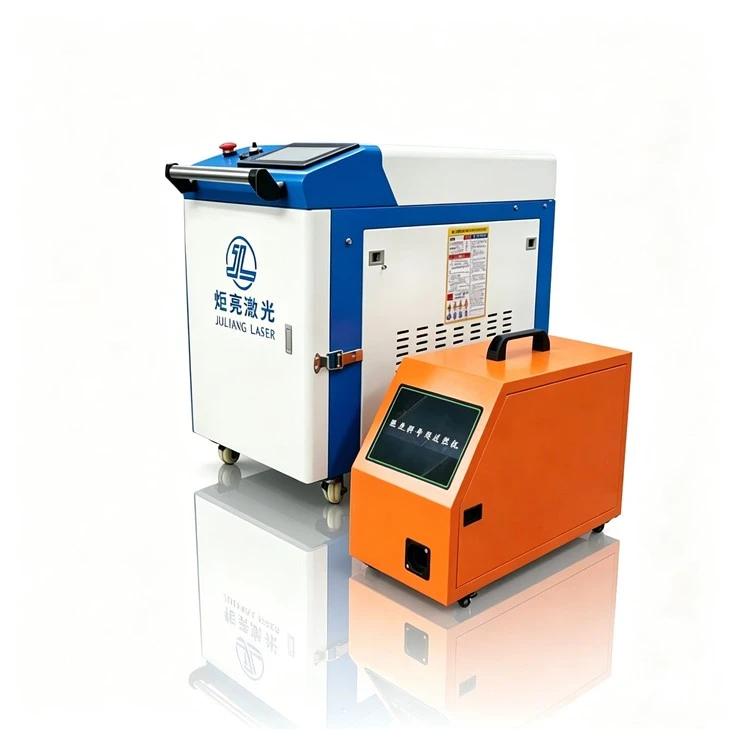
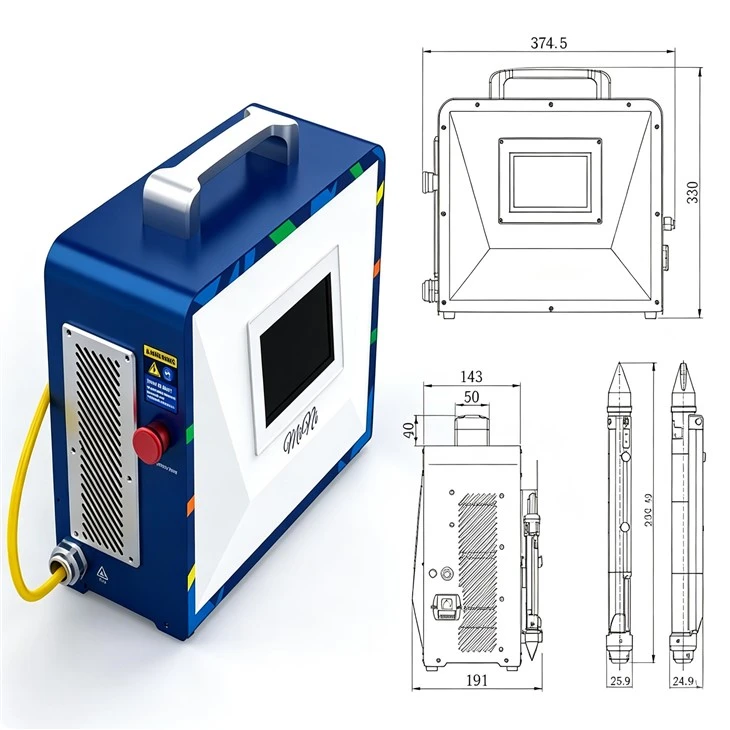
- Air - cooled systems: These systems use fans to dissipate heat from the laser source. They are relatively simple and cost - effective, but their cooling capacity is limited. Air - cooled systems are suitable for low - power laser welding machines or applications with low - duty - cycle operations. For instance, our Portable Air - Cooled Handheld Fiber Laser Welding Machine is designed with an air - cooled system, which is ideal for small - scale welding tasks.
- Water - cooled systems: Water - cooled systems use water as a coolant to remove heat from the laser source. They have a higher cooling capacity compared to air - cooled systems and are suitable for high - power laser welding machines or applications with high - duty - cycle operations. Our 3 - in - 1 Water - cooled Handheld Fiber Laser Welder is equipped with a water - cooled system to ensure stable operation even under high - load conditions.
Temperature Rise Limit of the Laser Source
The temperature rise limit of the laser source is determined by the manufacturer based on the design and materials of the laser source. Generally, the temperature rise limit is specified as the maximum allowable temperature increase above the ambient temperature.
For most laser sources, the temperature rise limit is in the range of 30 - 50 degrees Celsius above the ambient temperature. For example, if the ambient temperature is 25 degrees Celsius, the maximum temperature of the laser source should not exceed 55 - 75 degrees Celsius. However, this value can vary depending on the type and model of the laser welding machine.
It's important to note that the temperature rise limit is not a fixed value but a guideline. To ensure the reliable operation of the laser welding machine, it's necessary to monitor the temperature of the laser source in real - time and take appropriate measures if the temperature approaches the limit.
Monitoring and Controlling the Temperature of the Laser Source
To monitor the temperature of the laser source, most laser welding machines are equipped with temperature sensors. These sensors can provide accurate temperature readings, allowing operators to keep track of the temperature changes during operation.
If the temperature of the laser source approaches the limit, several measures can be taken to control the temperature:
Adjusting the Laser Power
Reducing the laser power can effectively reduce the heat generation. However, this may also affect the welding performance, so it should be done carefully.
Increasing the Cooling Capacity
If the cooling system is not sufficient to maintain the temperature within the limit, the cooling capacity can be increased. For air - cooled systems, this may involve increasing the fan speed or adding more fans. For water - cooled systems, it may require increasing the water flow rate or improving the cooling efficiency of the water chiller.
Reducing the Duty Cycle
Reducing the duty cycle means allowing the laser source more time to cool down between operations. This can be achieved by adjusting the welding parameters or increasing the intervals between welding tasks.
Our Laser Welding Machines and Temperature Control
At our company, we are committed to providing high - quality laser welding machines with excellent temperature control capabilities. Our products, such as the Handheld 4 - in - 1 MAX Fiber Laser Welding Machine, Multi - functional Integrated Laser Cutting and Welding Machine, and 1500W Air - cooled Handheld Fiber Laser Welding Machine, are designed with advanced cooling systems to ensure that the temperature of the laser source remains within the safe limit.
We also provide comprehensive technical support to our customers. Our team of experts can help customers select the most suitable laser welding machine based on their specific requirements and provide guidance on how to operate and maintain the machine to ensure optimal performance.
Conclusion
The temperature rise limit of the laser source in a laser welding machine is a critical factor that affects the performance, efficiency, and lifespan of the machine. By understanding the factors that influence the temperature rise, monitoring the temperature in real - time, and taking appropriate control measures, operators can ensure the reliable operation of the laser welding machine.
If you are interested in our laser welding machines or have any questions about the temperature rise limit or other technical aspects, please feel free to contact us for procurement and further discussions. We look forward to working with you to meet your welding needs.
References
- "Laser Welding Technology: Principles and Applications", John Wiley & Sons
- "Thermal Management in Laser Systems", SPIE Press