

What is the modulation frequency of the laser in an air - cooled handheld laser welding machine?
As a supplier of air - cooled handheld laser welding machines, I often encounter customers asking about various technical specifications of our products. One of the frequently asked questions is the modulation frequency of the laser in an air - cooled handheld laser welding machine. In this blog, I will delve into this topic to provide you with a comprehensive understanding.
Understanding Modulation Frequency
The modulation frequency of a laser refers to the rate at which the laser's power is varied or modulated. It is usually measured in Hertz (Hz). In the context of an air - cooled handheld laser welding machine, the modulation frequency plays a crucial role in determining the welding quality and efficiency.
When we talk about modulation, we are essentially changing the intensity of the laser beam over time. A higher modulation frequency allows for more precise control of the laser energy input into the welding area. This is particularly important when dealing with different types of materials and welding requirements. For example, when welding thin materials, a higher modulation frequency can prevent over - heating and ensure a more accurate weld.
The Significance of Modulation Frequency in Air - Cooled Handheld Laser Welding Machines
Welding Quality
The modulation frequency directly affects the fusion of the workpieces. In an air - cooled handheld laser welding machine, a proper modulation frequency ensures that the molten metal in the welding pool solidifies evenly. If the frequency is too low, the energy input may be inconsistent, leading to uneven weld beads, porosity, or even incomplete fusion. On the other hand, a very high frequency may cause excessive energy concentration in a short period, which can damage the material or cause spattering.
Welding Speed
The modulation frequency also has an impact on the welding speed. A higher modulation frequency can increase the welding speed to some extent. This is because it allows the laser to deliver energy in a more efficient and rapid manner. However, it is important to note that there is an optimal balance between the modulation frequency and the welding speed. If the speed is increased too much without adjusting the frequency properly, the quality of the weld may be compromised.
Factors Affecting the Optimal Modulation Frequency
Material Properties
Different materials have different thermal conductivity, melting points, and absorption rates for laser energy. For instance, metals like aluminum have high thermal conductivity, which means they dissipate heat quickly. To weld aluminum effectively with an air - cooled handheld laser welding machine, a relatively higher modulation frequency may be required to maintain a stable welding pool. In contrast, materials with low thermal conductivity, such as stainless steel, may require a lower modulation frequency to prevent over - heating.
Welding Thickness
The thickness of the workpieces being welded is another important factor. When welding thin materials, a high modulation frequency can be used to control the heat input precisely and avoid burning through the material. For thicker materials, a lower frequency may be more suitable as it allows for more energy to be delivered to the deeper layers of the material.
Typical Modulation Frequency Ranges in Air - Cooled Handheld Laser Welding Machines
In general, the modulation frequency of air - cooled handheld laser welding machines can range from a few Hertz to several kilohertz. For basic welding applications on common materials like mild steel, a modulation frequency in the range of 10 - 100 Hz may be sufficient. However, for more advanced applications such as precision welding of thin - walled components or welding of special materials, the frequency may need to be adjusted to the range of 100 Hz - 10 kHz.
Our company offers a variety of air - cooled handheld laser welding machines to meet different customer needs. For example, our Multi-functional Integrated Laser Cutting and Welding Machine is designed with a wide range of adjustable modulation frequencies, allowing users to customize the welding process according to the specific requirements of their projects. Another popular product is our 1500W Air - cooled Handheld Fiber Laser Welding Machine, which also provides flexible modulation frequency settings to ensure high - quality and efficient welding.
How to Determine the Right Modulation Frequency
Determining the right modulation frequency for a particular welding task requires some experimentation and experience. Here are some steps that can help:
- Understand the Material: As mentioned earlier, different materials have different requirements. Research the thermal properties of the material you are going to weld to get a rough idea of the suitable frequency range.
- Start with Standard Settings: Most air - cooled handheld laser welding machines come with default or standard modulation frequency settings for common materials and thicknesses. You can start with these settings and make adjustments based on the initial test welds.
- Conduct Test Welds: Perform test welds on scrap pieces of the same material and thickness as your actual workpieces. Observe the quality of the welds, including the appearance of the weld bead, the presence of porosity or cracks, and the strength of the joint. Based on these observations, adjust the modulation frequency up or down.
- Iterate and Optimize: Continue to make small adjustments to the frequency and repeat the test welds until you achieve the desired welding quality and efficiency.
Conclusion
The modulation frequency of the laser in an air - cooled handheld laser welding machine is a critical parameter that significantly impacts the welding process. By understanding how it works, the factors that affect it, and how to determine the right frequency for a specific task, you can ensure high - quality welds and improve your overall welding efficiency.

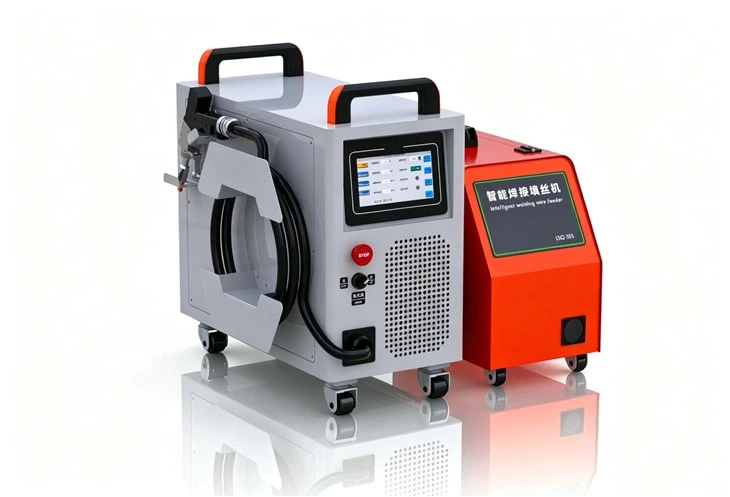
If you are interested in our air - cooled handheld laser welding machines or have any questions about the modulation frequency or other technical specifications, please feel free to contact us for further discussion and procurement negotiation. We are committed to providing you with the best solutions for your welding needs.
References
- Lasers in Material Processing: Principles, Techniques, and Applications. Springer.
- Handbook of Laser Welding. Wiley.