

Hey there, laser welding enthusiasts! I'm a supplier of high - speed pulse laser welding machines, and today I want to delve into a crucial question: Is a high - speed pulse laser welding machine suitable for mass production?
Let's first understand what a high - speed pulse laser welding machine is. These machines use high - energy laser pulses to join materials together. The high - speed aspect means they can perform welding operations quickly, which seems like a great fit for mass production on the surface. But as with many things in manufacturing, the answer isn't always that straightforward.
Advantages for Mass Production
Speed and Efficiency
One of the most significant advantages of high - speed pulse laser welding machines in mass production is, well, the speed. They can weld parts at a much faster rate compared to traditional welding methods. For instance, in a production line where you're making small metal components like jewelry or electronic parts, a high - speed pulse laser welding machine can complete the welding process in a fraction of the time it would take a manual welder. This means you can produce more units within a given time frame, increasing your overall production capacity.
Precision and Consistency
In mass production, consistency is key. You want every product that comes off the line to be of the same high quality. High - speed pulse laser welding machines offer extremely high precision. The laser beam can be focused precisely on the welding area, which reduces the chances of errors such as over - welding or under - welding. This precision ensures that each weld is of the same quality, whether you're making the first unit or the thousandth. For example, in the automotive industry, when welding small engine parts, the consistent quality of the welds provided by these machines helps in maintaining the overall performance and safety of the vehicles.
Non - contact Welding
Another great feature is that high - speed pulse laser welding is a non - contact process. This means there's no physical contact between the welding tool and the workpiece. As a result, there's less wear and tear on the equipment, and you don't have to worry about tool contamination. In industries where cleanliness is crucial, like the medical device manufacturing sector, this non - contact welding is a huge plus. It also allows for welding in hard - to - reach areas where a traditional welding torch might not fit.
Limitations for Mass Production
High Initial Investment
However, high - speed pulse laser welding machines come with a significant drawback - the high initial cost. Purchasing one of these machines is a big financial commitment. For small and medium - sized enterprises (SMEs) that are just starting to scale up their production, this cost can be prohibitive. You not only have to pay for the machine itself but also for the necessary installation, training, and maintenance. This can be a major hurdle for companies looking to adopt this technology for mass production.
Material Compatibility
Not all materials are suitable for high - speed pulse laser welding. Some materials may absorb the laser energy differently, which can lead to inconsistent welds or even damage to the material. For example, highly reflective materials like copper and aluminum can be challenging to weld with a laser because they reflect a large portion of the laser beam. This means that if your mass production involves a wide range of materials, you may need to invest in additional equipment or adjust your production process to accommodate the limitations of laser welding.
Technical Expertise
Operating a high - speed pulse laser welding machine requires a certain level of technical expertise. Your operators need to understand how to set up the machine, adjust the laser parameters, and troubleshoot any issues that may arise. Training your staff to use these machines effectively can take time and resources. In a mass - production environment, where downtime is costly, having skilled operators is essential. If your workforce lacks the necessary skills, it can lead to production delays and quality issues.
Real - World Applications in Mass Production
Despite these limitations, high - speed pulse laser welding machines are widely used in several industries for mass production.
In the electronics industry, they're used to weld tiny components like circuit boards. The high precision and speed of these machines are perfect for this type of work. For example, when manufacturing smartphones, laser welding is used to connect the various internal components, ensuring a reliable electrical connection.
The aerospace industry also benefits from high - speed pulse laser welding. The ability to weld lightweight materials with high precision is crucial in aircraft manufacturing. These machines are used to weld parts such as engine components and structural elements, where the quality of the weld directly impacts the safety and performance of the aircraft.
Our Product Offerings for Mass Production
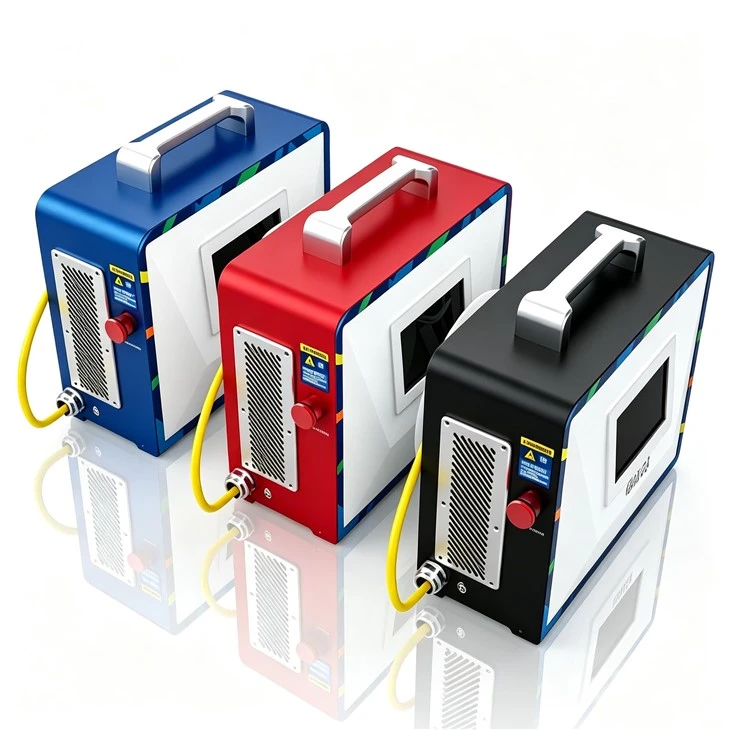
As a supplier, I'm proud to offer a range of high - speed pulse laser welding machines that are well - suited for mass production. Two of our popular models are the Portable Air - Cooled Handheld Fiber Laser Welding Machine and the Handheld 4 - in - 1 MAX Fiber Laser Welding Machine.
The Portable Air - Cooled Handheld Fiber Laser Welding Machine is great for small - to - medium - scale mass production. It's lightweight and easy to move around, which makes it ideal for flexible production environments. You can use it to weld a variety of materials, and its air - cooling system ensures reliable operation without the need for complex water - cooling setups.
The Handheld 4 - in - 1 MAX Fiber Laser Welding Machine offers even more versatility. It combines four different welding functions in one machine, which can significantly increase your production efficiency. Whether you're welding thin sheets or thick materials, this machine can handle it all.

Conclusion
So, is a high - speed pulse laser welding machine suitable for mass production? The answer is yes, but with some caveats. While these machines offer many advantages in terms of speed, precision, and non - contact welding, they also come with challenges such as high cost, material compatibility issues, and the need for technical expertise.
If you're considering using a high - speed pulse laser welding machine for your mass - production needs, I'd encourage you to reach out. We can help you assess whether our machines are the right fit for your specific requirements. By working together, we can find the best solution to boost your production efficiency and quality. Don't hesitate to contact us to start a discussion about your procurement needs.
References
- "Laser Welding: Principles and Applications" by John C. Ion
- "Advanced Manufacturing Technologies" by various authors in the field of manufacturing engineering